📞 (954) 667-8695 | Fort Lauderdale, FL
By 2026, 75% of B2B sales organizations will rely on AI-powered tools for prospecting, qualification, and outreach, according to Gartner. If you’re not among them, you’re paying up to 50% more per qualified lead than your competitors. AI lead generation has fundamentally changed the game. It’s no longer about cold outreach volume—it’s about hyper-personalized precision at scale.
Companies using generative AI to personalize email outreach see a 32% increase in reply rates. Sales teams save 40% of their time previously spent on non-revenue activities. The question isn’t whether to adopt AI for lead generation. It’s how quickly you can implement it before your competition leaves you behind.

Traditional lead generation was a volume game. You blasted thousands of emails, hoped for a 2% response rate, and burned through contact lists faster than you could replenish them. The math was brutal: high cost-per-qualified-lead, exhausted sales teams, and prospects who saw your messages as spam.
Generative AI flipped this model entirely. Instead of casting a wide net, AI enables what experts call “synthetic ICP” modeling—identifying market segments and buying signals that traditional analysis would never catch. The technology synthesizes CRM data, news triggers, social signals, and behavioral patterns to create genuinely relevant outreach at the exact right moment.
The shift from “cold” to “contextual” outreach represents the biggest change in B2B sales since the invention of email. Clara Hughes, VP of Product at Salesforce, puts it this way: “The magic isn’t just generating an email. It’s synthesizing data to generate a reason for outreach that is genuinely relevant right now.”
That relevance drives results. When your message references a prospect’s recent funding round, a new hire in their department, or a pain point they just posted about on LinkedIn, you’re not interrupting—you’re starting a conversation. The data backs this up: AI-personalized outreach generates 32% higher reply rates than template-based campaigns.
Here’s what makes 2026 different from even two years ago: the technology is no longer experimental. Over $15 billion was invested in AI-native sales platforms in 2025 alone. Major CRM providers have integrated generative AI directly into their core products. What was once available only to enterprise companies with dedicated data science teams is now accessible to any business with a sales team and a CRM subscription.
The competitive advantage window is closing fast. Early adopters are already seeing 50% reductions in cost-per-qualified-lead. By the end of this year, AI-powered prospecting will be table stakes, not a differentiator. The question is whether you’ll be leading the pack or playing catch-up.
Successful AI lead generation rests on three interconnected pillars. Each builds on the previous one, and skipping ahead without a solid foundation leads to poor results. Here’s how the best-performing B2B sales teams structure their AI-powered prospecting systems.
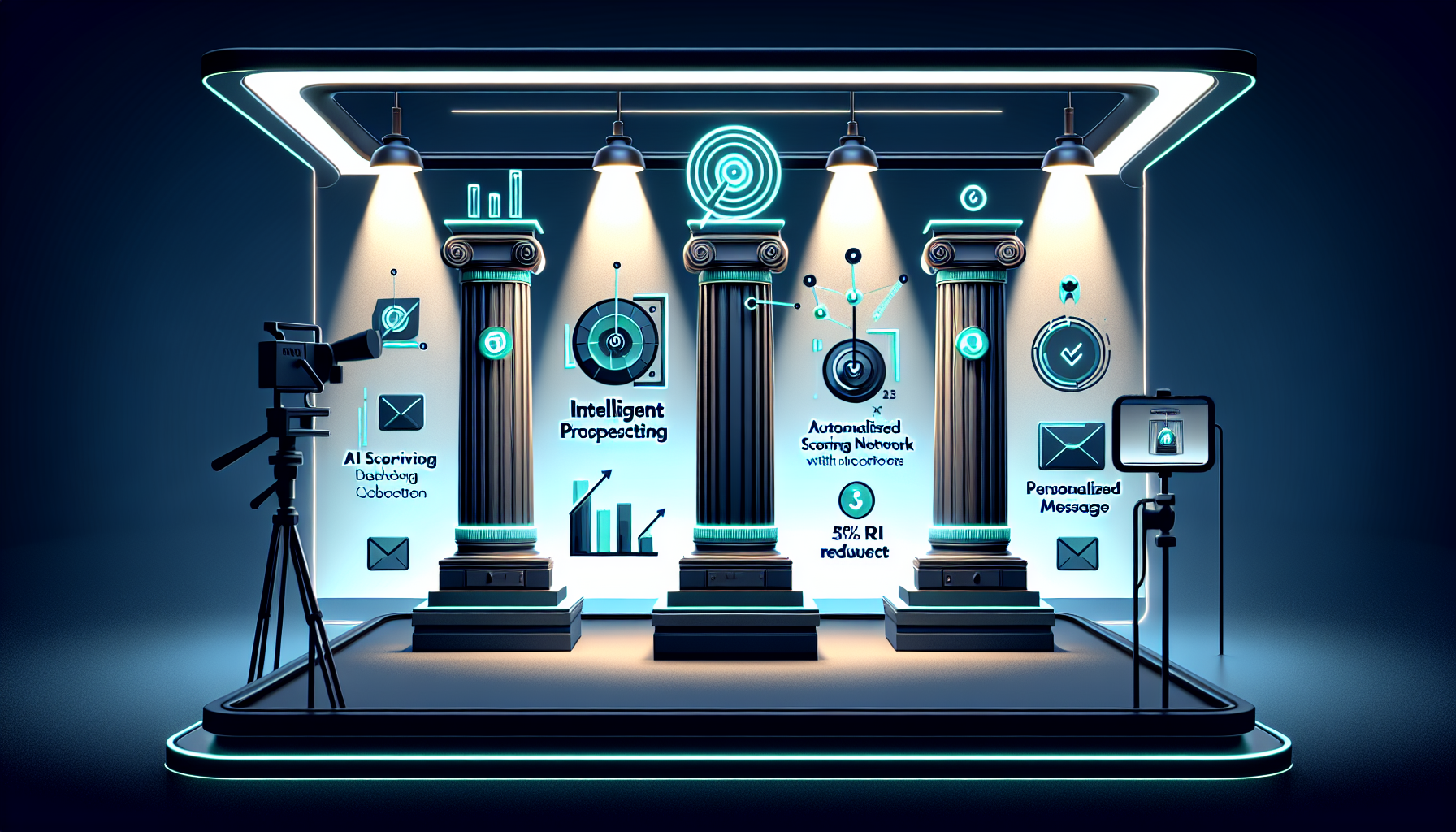
Traditional prospecting relies on firmographics: company size, industry, location, revenue. AI-powered prospecting adds behavioral signals and trigger events to the mix. It identifies leads based on what they’re doing right now, not just who they are on paper.
For example, AI can flag when a prospect company posts a job opening for a role your product supports, when they receive new funding, when a key decision-maker changes jobs, or when they engage with content related to problems you solve. These signals indicate active buying intent—the prospect is already looking for solutions like yours.
The result? Your sales team spends time on prospects who are actually in-market, not cold contacts who might need your product someday. This focus alone can double your conversion rate from prospect to qualified lead.
Once AI identifies potential leads, it scores and routes them automatically. This is where the 40% time savings for SDRs comes from. Instead of manually researching every lead and deciding who to contact first, AI handles qualification instantly.
Modern AI qualification goes far beyond simple lead scoring. It analyzes dozens of data points: website behavior, content engagement, social media activity, technographic data, and historical patterns from your CRM. The system learns which characteristics predict closed deals and prioritizes leads accordingly.
According to Forrester Research, companies using AI for lead enrichment and qualification see a 50% reduction in cost-per-qualified-lead. That’s not a marginal improvement—it’s a fundamental shift in sales economics. Your team stops chasing dead ends and focuses exclusively on high-probability opportunities.
This is where generative AI truly shines. Instead of filling in name and company fields in an email template, AI crafts unique messages using real-time context. It references recent funding rounds, job changes, company news, content the prospect engaged with, and problems they’ve publicly discussed.
The difference between AI-generated personalization and template-based outreach is night and day. Templates feel like templates. AI-generated messages, when done well, feel like a human researched the prospect and wrote a thoughtful note. That’s why they generate 32% higher reply rates.
These three pillars work together as a system. Better prospecting feeds better qualification. Better qualification enables better personalization. The compounding effect is what drives the 50% cost reduction and 40% time savings that leading companies are achieving.
You don’t need to build custom AI models or hire a data science team to implement AI lead generation. The platforms exist today, and they’re more accessible than ever. Here’s what the landscape looks like in 2026.
Salesforce Einstein GPT is integrated across the entire CRM ecosystem. It automates personalized outreach, summarizes sales interactions, generates follow-up tasks, and provides real-time coaching for sales reps. If you’re already using Salesforce, Einstein GPT is the fastest path to AI-powered lead generation—no platform switching required.
HubSpot’s AI Assistant offers similar capabilities with a more accessible price point for mid-market companies. It drafts sales emails, generates reports, scores leads based on complex behavioral patterns, and automates routine follow-ups. The interface is intuitive enough that sales teams can start using it with minimal training.
Both platforms excel at integration. They connect with your existing tech stack, pull data from multiple sources, and deliver AI capabilities within workflows your team already uses. For most businesses, starting with your current CRM’s AI features is the smartest move.
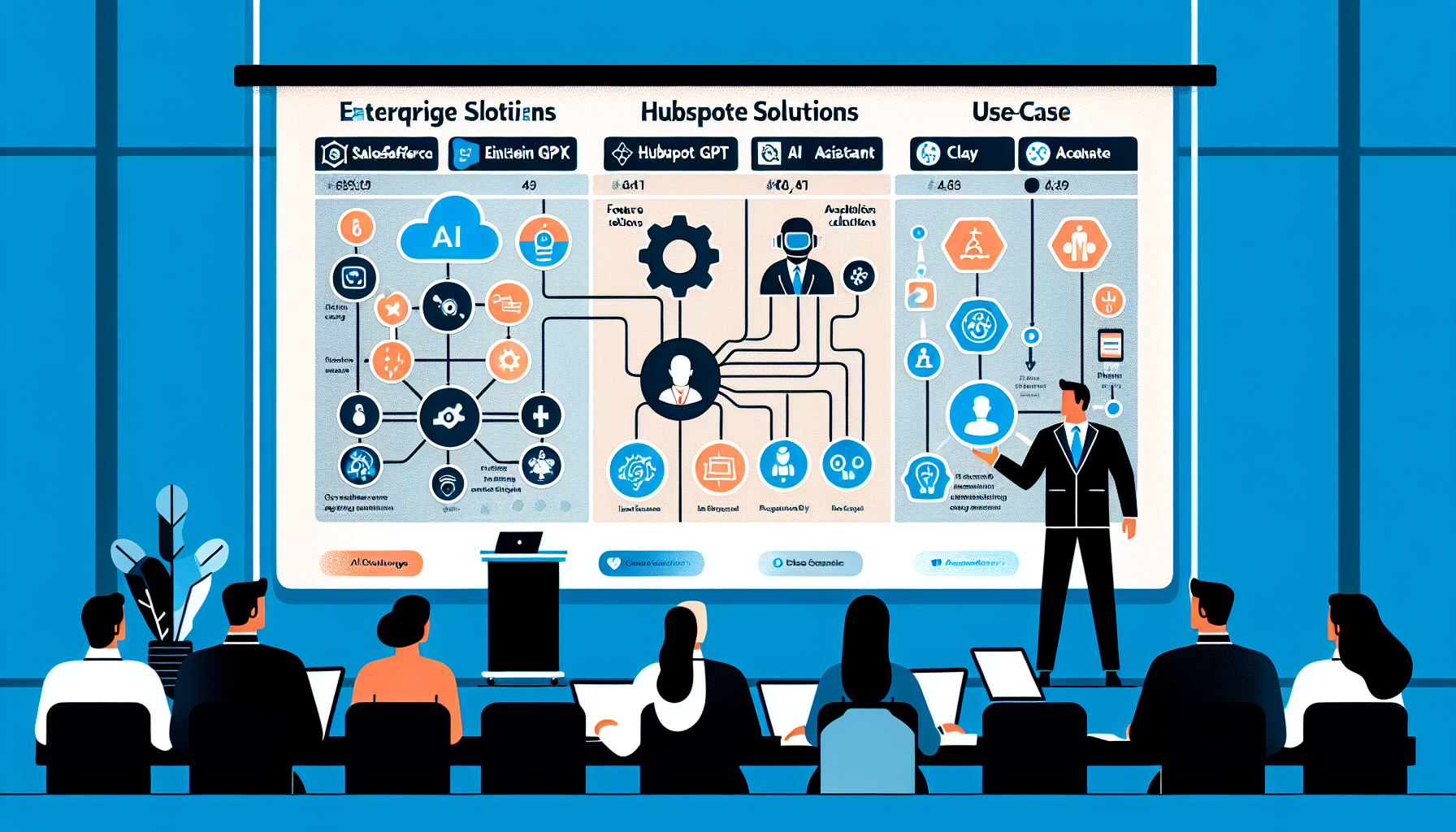
Clay represents a new category of data enrichment and AI message generation platforms. It chains together dozens of data sources—LinkedIn, company databases, news feeds, social media, technographic data—and uses AI to synthesize all that information into hyper-personalized outreach.
What makes Clay powerful is its flexibility. You can build custom workflows that combine data from any source, apply AI at multiple stages, and generate outreach that’s far more sophisticated than what CRM-native tools produce. The trade-off is complexity—Clay requires more setup and ongoing management than plug-and-play CRM solutions.
The emerging category to watch is Autonomous Sales Agents. These platforms don’t just assist your sales team—they execute entire campaigns with minimal oversight. They research prospects, find contact information, craft personalized messages, send outreach, handle initial responses, and only escalate to humans when a lead is qualified and ready for a sales conversation.
Platform selection comes down to four criteria: integration with your existing CRM, breadth of data sources, customization flexibility, and cost per lead. Most businesses should start with their CRM’s native AI tools and add specialist platforms only when they hit specific limitations.
Let’s translate percentages into dollars. The numbers sound impressive, but what do they mean for your business? Here’s the real-world impact of AI lead generation.

Salesforce data shows a 32% increase in reply rates when using generative AI for email personalization. If your current outreach generates 100 replies per month and converts 20 of those to qualified leads, a 32% increase means 132 replies and approximately 26 qualified leads—a 30% boost in pipeline with the same outreach volume.
Now factor in the cost reduction. If you’re currently paying $200 per qualified lead and AI reduces that by 50%, you’re now paying $100 per lead. For a company generating 100 qualified leads per month, that’s $10,000 in monthly savings—$120,000 annually. The ROI on AI platform subscriptions (typically $500-$2,000 per month) is immediate and substantial.
HubSpot research shows that SDRs save 40% of their time previously spent on non-revenue-generating activities. For a five-person SDR team, that’s the equivalent of two full-time employees freed up to focus on qualified conversations and deal progression. You can either reduce headcount (not recommended) or dramatically increase pipeline volume with the same team size.
The compounding effect is what makes AI lead generation transformative. Better reply rates lead to more qualified conversations. More qualified conversations lead to higher close rates. Higher close rates lead to lower customer acquisition cost. The entire sales funnel improves.
Most businesses see measurable improvement within 60-90 days of implementation. The first 30 days are setup and training. Days 31-60 are pilot campaigns and refinement. By day 90, you should have clear data showing improved reply rates, reduced cost-per-lead, and time savings for your sales team.
The key is setting proper expectations. AI won’t fix a broken sales process or a poorly defined ideal customer profile. It amplifies what’s already working. If your current outreach generates zero replies, AI-generated outreach will also generate zero replies—just faster. Fix your fundamentals first, then apply AI to scale what works.
Here’s the proven 90-day roadmap for implementing AI lead generation. This timeline assumes you have a functioning sales process and CRM—if you don’t, address those foundations first.
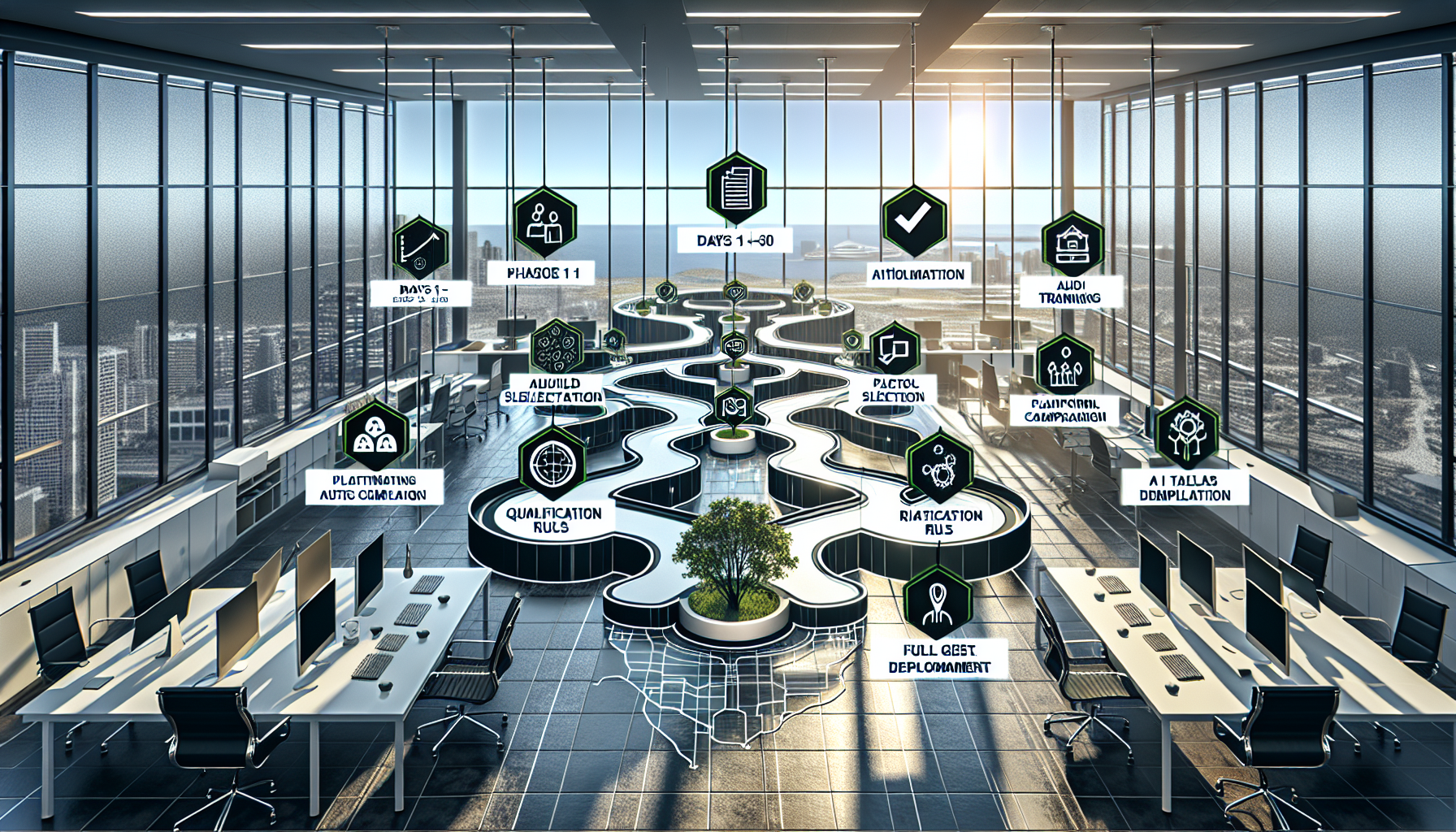
Start by auditing your current lead generation process. Document your ideal customer profile, your best-performing outreach messages, your conversion rates at each funnel stage, and your cost-per-qualified-lead. These baseline metrics are essential for measuring AI’s impact.
Select your platform based on the criteria discussed earlier. If you’re already using Salesforce or HubSpot, start with their native AI tools. If you need more sophisticated data enrichment, evaluate Clay or similar specialist platforms. Most businesses should avoid building custom solutions—the off-the-shelf options are mature and cost-effective.
Integrate the platform with your CRM and define your ICP parameters in detail. The more specific you are about who you’re targeting and why, the better AI can identify similar prospects. Include firmographics, behavioral signals, trigger events, and any other criteria that predict deal success.
Train the AI on your best-performing outreach. Feed it examples of emails that generated high reply rates, calls that led to qualified meetings, and messaging that resonates with your target audience. Most platforms learn from your historical data automatically, but you can accelerate the process by highlighting your best examples.
Set up automated qualification rules based on your ICP and historical conversion data. Define what constitutes a qualified lead, what signals indicate buying intent, and how leads should be prioritized and routed to your sales team.
Launch a pilot campaign to 100-200 prospects. Keep the volume small so you can closely monitor results, gather feedback from your sales team, and refine the system before scaling. Review every AI-generated message before it goes out—this is the “AI-assisted” phase, not fully autonomous yet.
Analyze your pilot results against baseline metrics. You should see improvements in reply rates, qualification accuracy, and SDR time allocation. If you don’t, troubleshoot before scaling—the problem is usually in ICP definition, message quality, or data quality, not the AI itself.
Refine your messaging and targeting based on pilot learnings. AI platforms improve with feedback—tell the system which messages performed well and which didn’t, and it will adjust accordingly. This continuous refinement is what separates good results from great results.
Scale to full prospecting volume once you’re confident in the system. Most businesses can transition from AI-assisted (human review before send) to fully autonomous outreach at this stage. Keep monitoring quality, but you shouldn’t need to review every message anymore.
Resource requirements are modest: one sales operations person or marketing manager, 10-15 hours per week during setup, and 3-5 hours per week ongoing. As Dr. Alistair Finch from Forrester notes, “The role of the human SDR is shifting from cold outreach to managing a fleet of AI agents and handling warm, qualified conversations.”
AI lead generation is powerful, but it comes with risks. Hyper-personalization can feel invasive if not done thoughtfully. AI can generate factually incorrect information. Brand voice can drift if you don’t set proper guardrails. Here’s how to navigate these challenges.
Data privacy compliance is non-negotiable. Ensure your platform adheres to GDPR, CCPA, and any industry-specific regulations that apply to your business. This means obtaining proper consent for data collection, providing opt-out mechanisms, and being transparent about how you’re using prospect data.
The line between personalized and creepy is thinner than you think. Referencing a prospect’s recent LinkedIn post is good personalization. Referencing their child’s soccer game from a Facebook photo is invasive. Use publicly available professional information only, and always ask yourself: “Would I be comfortable if someone sent me this message?”
AI hallucination—generating factually incorrect information—is a real risk. Implement human review checkpoints, especially in the early stages. Set up automated quality checks that flag messages containing claims about your product, pricing, or capabilities that might be inaccurate.
Brand voice alignment requires active management. Train your AI on approved messaging, set explicit guardrails about tone and language, and review samples regularly. Most platforms allow you to define forbidden phrases, required elements, and tone guidelines that the AI must follow.
The job displacement concern is real but often overstated. AI augments sales teams, it doesn’t replace them. SDRs shift from manual prospecting to higher-value activities: managing AI systems, handling qualified conversations, and building relationships. The best approach is positioning AI as a tool that makes your team more effective, not a replacement for human judgment.
Best practice: start with AI-assisted outreach where humans review messages before they’re sent. Once you’re confident in quality and brand alignment, transition to fully autonomous operation with periodic spot-checks. This phased approach minimizes risk while maximizing the efficiency gains AI provides.
By the end of 2026, 75% of B2B sales organizations will be using AI for lead generation. Early movers gain 12-18 months of competitive advantage—lower costs, higher conversion rates, and more efficient sales teams while their competitors are still doing manual prospecting.
The three pillars—intelligent prospecting, automated qualification, and hyper-personalized outreach—work together as a system. The 90-day implementation roadmap gives you a clear path from setup to scale. The platforms exist, the ROI is proven, and the technology is accessible to businesses of any size.
The question isn’t whether AI will transform B2B lead generation. It already has. The question is whether you’ll be among the 75% who adopt it in time to gain competitive advantage, or part of the 25% who wait until it’s too late and spend the next three years playing catch-up.
The technology is proven. The ROI is measurable. The only question is when you start. If you’re ready to cut your cost-per-qualified-lead by 50% and free up 40% of your sales team’s time, the roadmap is right here. The competitive window is open, but it won’t stay that way for long.