📞 (954) 667-8695 | Fort Lauderdale, FL
By 2026, over 60% of new enterprise automation initiatives will use intelligent, agent-based models rather than traditional robotic process automation. If you’ve invested in RPA over the past three years, that statistic should worry you. The bots you built to click through invoices or update CRM records are already showing their age. They break when your software updates. They can’t handle exceptions. And they require constant maintenance from your IT team. Meanwhile, a new category of AI—agentic workflows—is quietly replacing those rigid scripts with systems that learn, adapt, and optimize themselves. This isn’t hype. It’s a fundamental shift in how businesses automate, and it’s happening right now.
Agentic workflows represent a fundamental departure from traditional automation. Instead of following a predetermined sequence of clicks and keystrokes, these systems pursue outcomes. You don’t tell an agentic workflow how to process an invoice. You tell it what success looks like: invoices approved within 24 hours, zero payment errors, proper routing to the right approver. The agent figures out how to get there.

The distinction matters more than you might think. Traditional RPA mimics human actions. It records your clicks, your keystrokes, your navigation path through software interfaces. Then it plays that recording back, over and over, exactly the same way. Agentic workflows understand intent. They interpret what needs to happen and choose the best path to make it happen.
Dr. Kenji Tanaka, who leads MIT’s Autonomous Systems Lab, puts it this way: “We’ve moved from programming tasks to programming goals.” His research shows that agentic systems combine large language models for reasoning with reinforcement learning for optimization. The LLM interprets unstructured data—emails, PDFs, handwritten forms—without requiring you to map every possible format. The reinforcement learning component measures outcomes and adjusts the approach over time.
Here’s a real-world example. A traditional RPA bot processing invoices needs explicit instructions for every vendor format. Vendor A sends PDFs with the invoice number in the top right. Vendor B uses Excel with the number in cell C4. Vendor C emails a scanned image. You program three different workflows. When Vendor D appears with a new format, your bot breaks. Someone files an IT ticket. Three days later, a developer adds a fourth workflow.
An agentic workflow sees all four formats as variations of the same task: extract invoice data, validate it, route it for approval. The agent interprets each document, identifies the relevant fields, and processes it. When Vendor D appears, the agent handles it on the first try. No IT ticket. No downtime. No manual intervention. The system logs the new pattern and gets better at recognizing similar formats in the future.
This self-optimization capability is the breakthrough. Traditional automation gets more brittle over time as your business environment changes. Agentic workflows get more resilient. They learn from every exception, every edge case, every variation they encounter.
Robotic process automation had its moment. Between 2020 and 2022, RPA reached peak market penetration. Businesses deployed thousands of bots to handle repetitive tasks. The promise was simple: automate the boring stuff, free up your team for higher-value work, see ROI in months.
Then reality set in. The bots that worked perfectly in testing started breaking in production. Software vendors pushed updates. User interfaces changed. Data formats evolved. And every change meant another round of bot maintenance. Many small and mid-sized businesses discovered they were spending more time maintaining their automation than they saved in labor costs.
The core problem is brittleness. RPA bots are fragile by design. They rely on exact screen coordinates, specific field names, predictable data structures. Change any of these elements and the bot fails. Dr. Sarah Finch, who leads automation research at Forrester, describes the limitation clearly: “RPA was about mimicking clicks. Agentic AI is about understanding intent. That’s not an incremental improvement. It’s a different category of technology.”
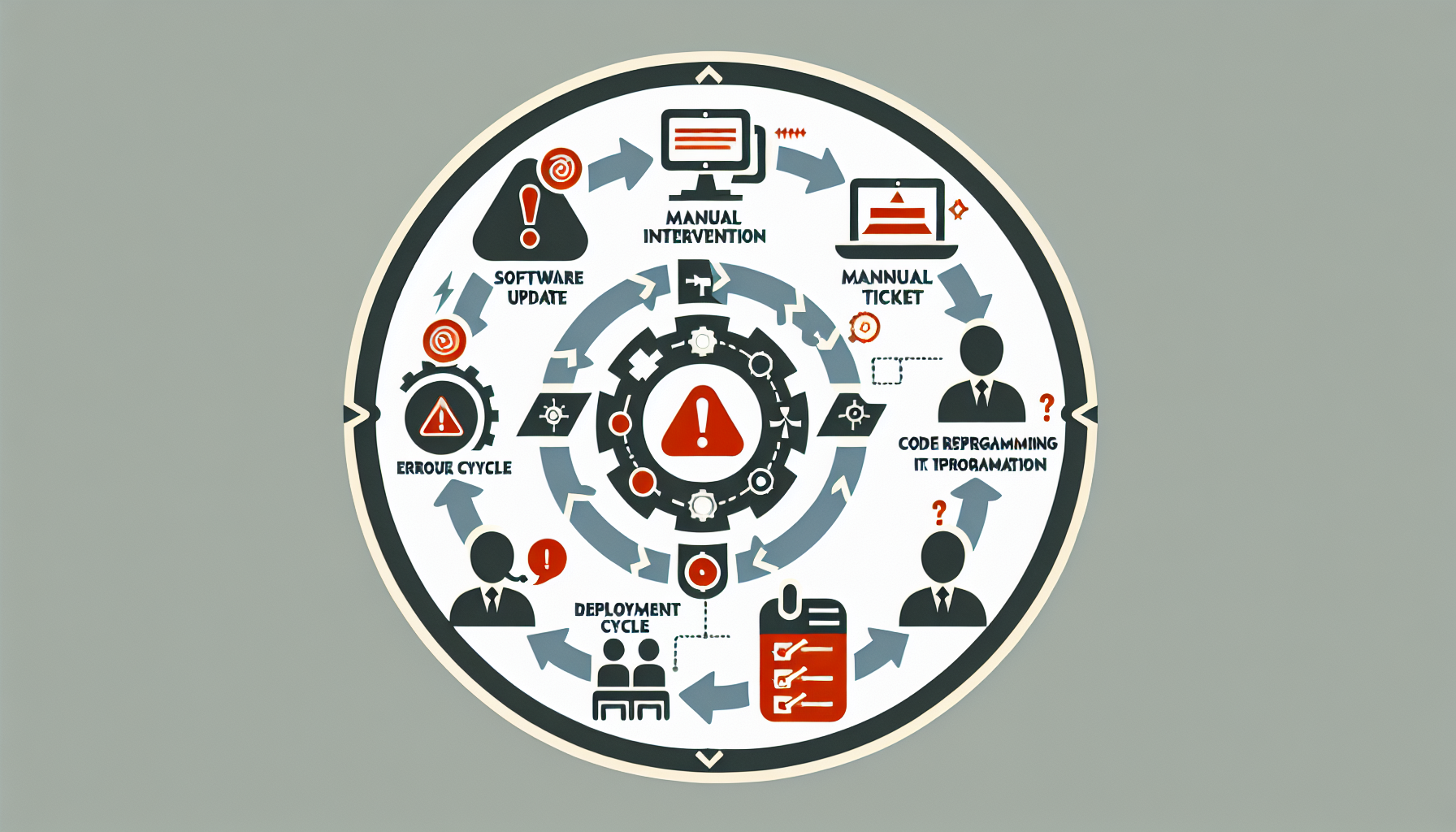
The maintenance burden compounds over time. A typical RPA deployment follows a predictable cycle. Your software vendor releases an update. The update changes a button label or moves a field. Your bot throws an error. Your operations team files an IT ticket. A developer investigates, identifies the change, reprograms the bot, tests it, and deploys the fix. Three to five days later, you’re back in business. Until the next update.
Exception handling exposes another critical weakness. RPA bots follow decision trees. If the data matches the expected format, proceed to step B. If not, throw an error and stop. There’s no middle ground. No interpretation. No judgment. A vendor sends an invoice with the date formatted as “March 3, 2026” instead of “03/03/2026” and your bot can’t process it. A human would recognize both formats instantly. Your bot sees an exception and halts.
The opportunity cost adds up quickly. Your IT team spends hours each week maintaining automation instead of building new capabilities. Your operations team spends hours handling exceptions that should have been automated. And your business loses the agility to adapt quickly when processes need to change. You’re locked into the workflows you programmed six months ago, even when your business has moved on.
Agentic workflows solve these problems through three core capabilities that traditional RPA simply cannot match. These aren’t incremental improvements. They represent a fundamental shift in how automation systems operate.
First, agentic systems interpret unstructured data. They read emails, PDFs, scanned documents, and handwritten forms without requiring you to pre-map every possible format. The language model component understands context. It recognizes that “invoice total,” “amount due,” and “total payable” all refer to the same concept. It extracts the relevant information regardless of where it appears on the page or how it’s formatted.
Second, these systems make decisions based on context, not just rules. A traditional RPA bot follows if-then logic. If the invoice amount exceeds $10,000, route to the CFO. If not, route to the department manager. An agentic workflow considers additional context. Is this vendor reliable? Has this department consistently stayed under budget? Is this purchase aligned with current priorities? The agent weighs multiple factors and makes a judgment call.
Third, and most importantly, agentic workflows learn from outcomes. Every time the agent completes a task, it measures the result. Did the invoice get approved? How long did it take? Were there any errors? Could the process have been faster? The agent uses this feedback to adjust its approach. Over time, it discovers patterns, optimizes routing decisions, and handles edge cases more effectively.
Consider accounts payable automation. A traditional RPA approach requires you to map out every step. Extract data from the invoice. Validate it against the purchase order. Check for approval authority. Route to the appropriate manager. Code the approval logic. Handle exceptions manually. The bot follows your flowchart exactly.
An agentic approach starts with the outcome: invoices approved accurately within 24 hours, with minimal manual intervention. You define success criteria. The agent figures out how to achieve them. It learns which vendors typically have discrepancies. It recognizes which types of purchases need additional scrutiny. It adapts its routing logic based on approval patterns. When a new vendor appears with an unfamiliar invoice format, the agent interprets it and processes it without requiring new programming.
Marcus Chen, CEO of Automata Inc., a leading workflow automation platform, describes the shift this way: “Stop mapping processes and start defining outcomes. That’s the fundamental difference. You’re not programming a sequence of actions. You’re programming a goal and letting the agent find the best path to reach it.”
The learning loop is what separates agentic workflows from every previous generation of automation technology. The agent observes the current state. It takes an action. It measures the outcome. It adjusts its strategy. This cycle repeats continuously, with the agent getting smarter and more efficient over time.
Deloitte’s 2026 automation research quantifies this advantage. Agentic systems adapt to business rule changes 2.5 times faster than traditional RPA. When you need to update an approval threshold or change a routing rule, you modify the outcome definition. The agent adjusts its behavior immediately. With RPA, you reprogram the bot, test it, and redeploy it. The difference compounds across dozens or hundreds of automated processes.
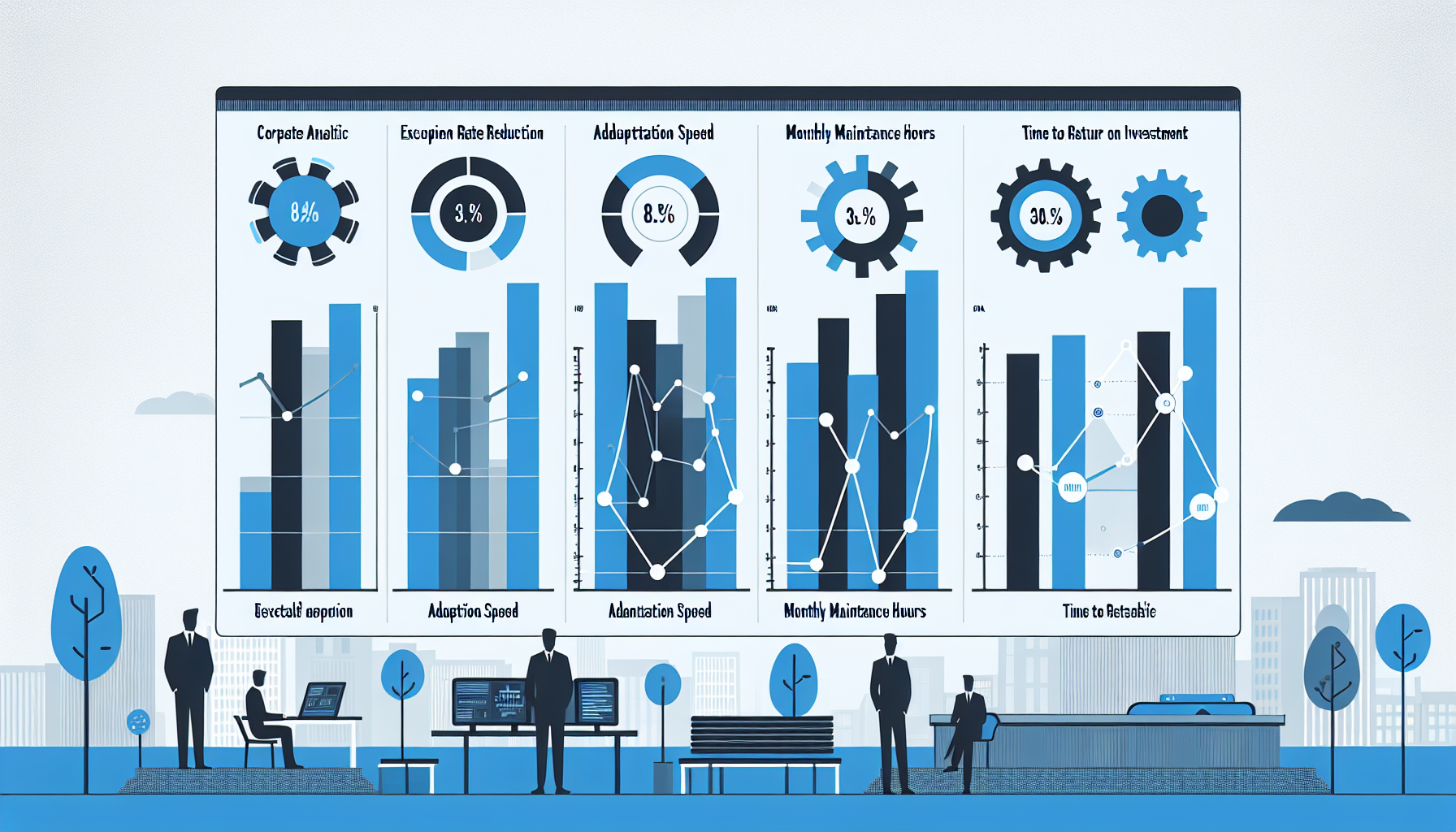
The business case for agentic workflows rests on three pillars: reduced exception rates, faster adaptation to change, and lower maintenance overhead. The data from early adopters tells a compelling story.
Forrester’s 2026 automation study tracked 200 small and mid-sized businesses that migrated from RPA to agentic workflows. The results were consistent across industries. Companies saw a 35% reduction in process exception rates within six months. Tasks that previously required manual intervention—handling unusual invoice formats, processing incomplete data, routing edge cases—were handled automatically by the agentic system.
Time savings were equally significant. A Nexarily internal case study with a 50-person professional services firm showed an 80% reduction in manual oversight for invoice processing. The operations manager who previously spent 15 hours per week handling exceptions and bot failures now spends less than three hours monitoring the agentic system. That’s 12 hours per week freed up for strategic work. Multiply that across multiple processes and the impact becomes substantial.
The adaptation speed advantage matters more than most businesses initially realize. When you need to change a business rule—update an approval threshold, modify a routing policy, add a new vendor—traditional RPA requires reprogramming. With agentic workflows, you update the outcome definition and the agent adjusts its behavior. Deloitte’s research shows this results in 2.5 times faster adaptation to business rule changes. In a dynamic business environment, that agility translates directly to competitive advantage.
The economic equation shifted dramatically in 2025. According to Stanford’s Human-Centered AI Index, the cost of LLM reasoning operations dropped 70% year-over-year. What was prohibitively expensive in 2024 became economically viable for mainstream business automation in 2025 and 2026. This cost reduction opened the door for small and mid-sized businesses to adopt agentic workflows at scale.
The market responded quickly. Venture funding for agentic workflow startups reached $4 billion in 2025, a 300% increase year-over-year. Established RPA vendors pivoted their product roadmaps. UiPath, Automation Anywhere, and Blue Prism all announced agentic capabilities in Q4 2025. New entrants like Adept AI focused exclusively on agent-based automation from day one.
ROI timelines improved significantly. Traditional RPA deployments typically reach breakeven at 8 to 12 months. Agentic workflows hit breakeven at 4 to 6 months. The faster payback comes from three factors: lower maintenance costs, higher process resilience, and faster time to value. You spend less time programming workflows and more time defining outcomes. The system handles exceptions automatically instead of requiring manual intervention. And the agent starts delivering value immediately, then improves over time.
The qualitative benefits matter just as much as the quantitative ones. IT teams report reduced burden and higher job satisfaction. They’re building capabilities instead of maintaining bots. Operations teams appreciate the reliability. Processes don’t break every time software updates. And business leaders gain agility. They can adapt processes quickly as business needs evolve without waiting for IT to reprogram automation.
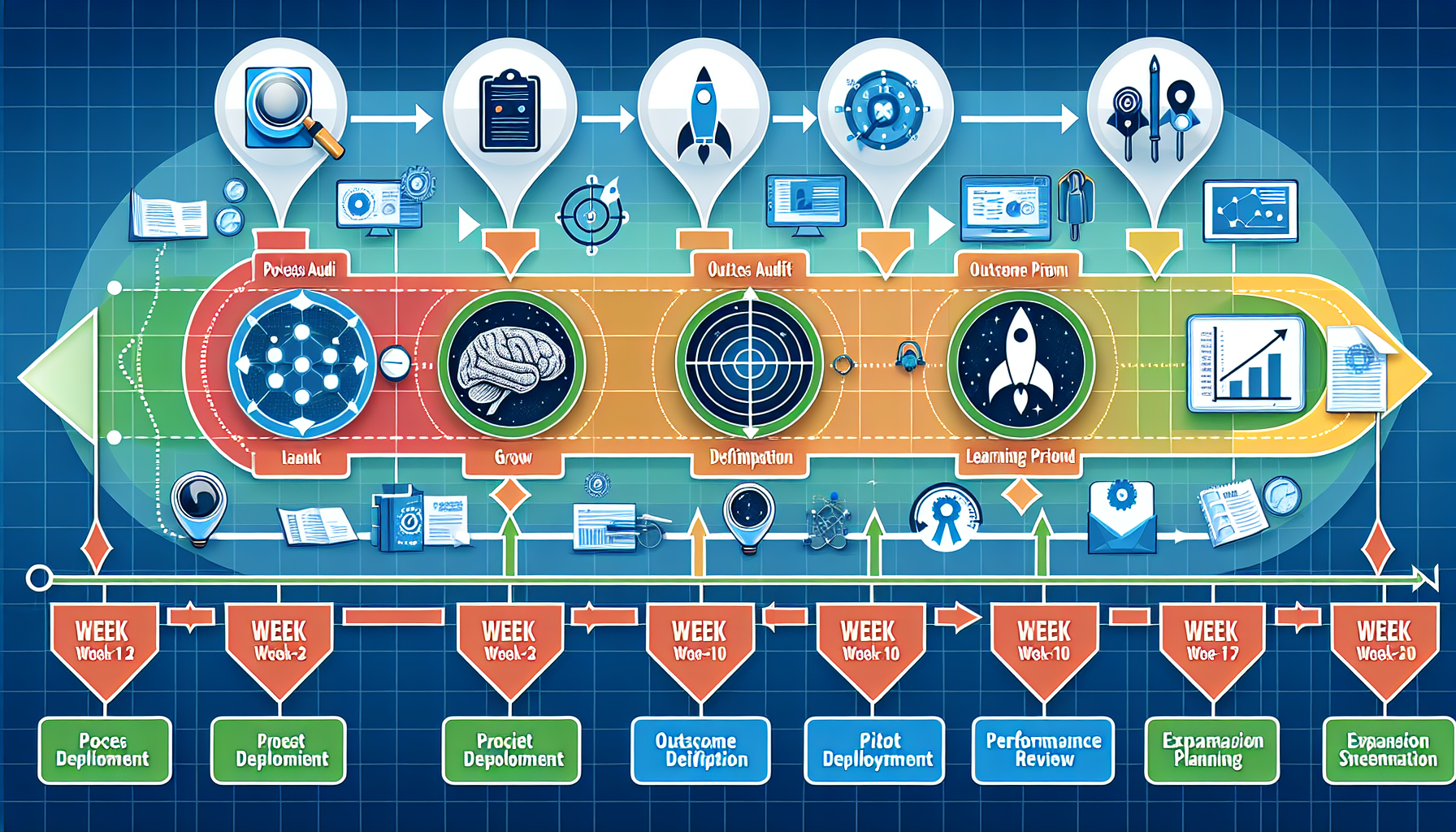
The transition from traditional automation to agentic workflows doesn’t require a wholesale replacement of your existing systems. The most successful implementations start small, prove ROI quickly, and expand systematically. Here’s the roadmap that’s working for small and mid-sized businesses in 2026.
Step one: Identify high-exception processes. Look at your existing automation and find the workflows that break most often. These are your best candidates for agentic replacement. Invoice processing, customer service routing, lead qualification, and data entry from unstructured sources typically top the list. These processes involve interpretation, judgment, and adaptation—exactly where agentic systems excel.
Step two: Define outcomes, not tasks. This requires a mental shift. Instead of documenting every step in the process, define what success looks like. For invoice processing, success might mean: invoices approved within 24 hours, zero payment errors, proper routing to authorized approvers, minimal manual intervention. Write these outcome criteria clearly. They become the goal your agent pursues.
Step three: Start with a pilot in one department. Choose a contained process with clear success metrics. Accounts payable, customer service, or lead routing work well for initial pilots. The goal is to prove ROI quickly and build organizational confidence before expanding to additional processes.
Step four: Measure baseline metrics. Before deploying the agentic system, document your current performance. How many exceptions occur per week? How many hours does your team spend on manual intervention? What’s the average cycle time? These baseline metrics let you quantify improvement and calculate ROI.
Step five: Deploy the agent and monitor the learning curve. Agentic systems typically take two to four weeks to stabilize. During this period, the agent encounters edge cases, learns patterns, and optimizes its approach. Monitor performance closely. Provide feedback when the agent makes mistakes. Most platforms include human-in-the-loop mechanisms that let you correct errors and help the agent learn faster.
Step six: Expand to adjacent processes once ROI is proven. After your pilot demonstrates measurable improvement, identify the next process to automate. Look for workflows that share characteristics with your successful pilot. This systematic expansion builds momentum and spreads the benefits across your organization.
Not all processes are equally suited for agentic automation. The best starting points share three characteristics. First, they involve unstructured or variable data. If every input is identical, traditional RPA works fine. Agentic workflows shine when data formats vary, when interpretation is required, when context matters. Second, they have clear success criteria. You need to define what good performance looks like so the agent knows what to optimize for. Third, they’re currently causing pain. High exception rates, frequent manual intervention, or constant maintenance all signal good candidates for agentic replacement.
The resource requirements for agentic workflows differ from traditional RPA. You’ll need less IT overhead. There’s no complex process mapping, no screen scraping configuration, no brittle click-path programming. Instead, you need clear outcome definitions and initial training data. The training data shows the agent what good performance looks like. For invoice processing, that might be 50 to 100 examples of correctly processed invoices with their associated data.
The technology landscape has matured rapidly. Established platforms from UiPath and Automation Anywhere now include agentic capabilities alongside their traditional RPA offerings. New entrants like Adept AI focus exclusively on agent-based automation. For small and mid-sized businesses, several SMB-focused tools have emerged that package agentic workflows for common use cases like invoice processing, customer service, and lead routing.
The timeline for mainstream adoption is clear. Q4 2025 marked the strategic pivot by RPA incumbents. 2026 is the year of mainstream SMB adoption. The technology is proven. The economics work. The question isn’t whether to adopt agentic workflows, but when and where to start.
Self-optimizing agents create a governance challenge that traditional automation doesn’t face. When a system learns and adapts on its own, how do you maintain visibility and control? This question matters especially in regulated industries where audit trails and accountability are non-negotiable.
The core controversy centers on transparency. Traditional RPA provides a step-by-step audit trail. You can see exactly what the bot did, when it did it, and why. Agentic workflows make decisions based on learned patterns and contextual interpretation. The decision-making process isn’t always transparent. This creates challenges in regulated industries like finance and healthcare where you need to explain and justify every automated decision.
Risk factors compound the concern. An agentic system typically has credentials to access multiple systems. It can read emails, update databases, initiate payments, and route approvals. If the agent makes a mistake, who’s accountable? If it learns an incorrect pattern, how do you detect and correct it? These aren’t theoretical concerns. They’re practical governance questions that every business must address.
The solution lies in layered governance. Modern agentic platforms include three key mechanisms. First, comprehensive decision logging. Every action the agent takes is recorded along with the reasoning behind it. You can audit what happened and understand why. Second, human-in-the-loop controls for high-stakes actions. You define thresholds where the agent must request human approval before proceeding. For example, invoices under $5,000 might be fully automated while invoices above that threshold require manager approval. Third, role-based access controls that limit what the agent can do in each system.
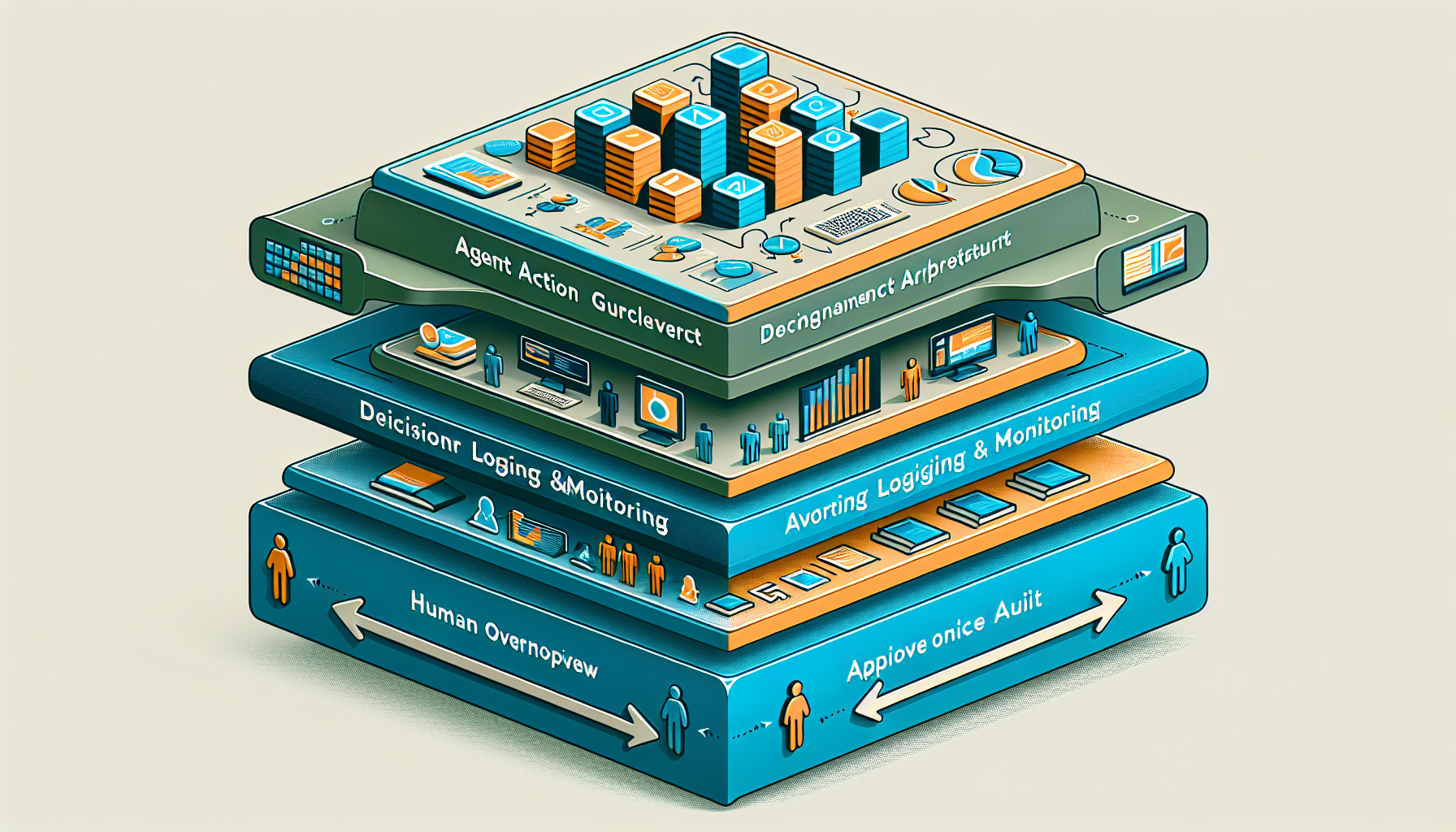
Industry standards are emerging rapidly. The IEEE and ISO are both developing frameworks for explainable automation and agent governance. These standards define requirements for decision transparency, audit trails, and human oversight. As the standards mature, compliance becomes easier and governance concerns diminish.
Practical advice for businesses starting with agentic workflows: begin with low-risk processes. Invoice processing and lead routing carry less risk than financial transactions or medical decisions. Implement monitoring dashboards that show what the agent is doing in real time. Maintain override capabilities so humans can step in when needed. And review agent decisions regularly to ensure the system is learning correct patterns.
The governance challenge is real but solvable. It’s not a reason to avoid agentic workflows. It’s a reason to implement them thoughtfully with appropriate controls. The tools and standards are maturing rapidly. This is a transitional challenge, not a permanent barrier.
Agentic workflows represent a fundamental shift from task automation to outcome automation. This isn’t an incremental improvement over traditional RPA. It’s a different category of technology that solves problems RPA cannot address. The limitations of traditional automation are structural. Brittleness, poor exception handling, and high maintenance overhead aren’t bugs to be fixed. They’re inherent to the task-based approach.
The business case is clear. Forrester’s research shows 35% reduction in process exception rates within six months. Nexarily’s case studies demonstrate 15 hours per week saved in manual oversight for a typical 50-person company. Deloitte’s data confirms 2.5 times faster adaptation to business rule changes. These aren’t projections. They’re measured results from businesses that have made the transition.
Implementation is more accessible than most small and mid-sized businesses realize. You don’t need a massive IT team or a six-month deployment. Start with one high-exception process. Define clear success criteria. Deploy an agent. Monitor the learning curve. Measure the results. Expand systematically. The roadmap is proven and the tools are ready.
The question isn’t whether to make this transition. The market has already decided. Sixty percent of new enterprise automation initiatives are using agent-based models. The RPA vendors have pivoted their roadmaps. The venture funding is flowing to agentic platforms. The question is when and where your business will start. The companies that move early gain competitive advantage. The companies that wait will find themselves maintaining obsolete automation while their competitors operate with greater agility and lower costs.
Ready to evaluate whether agentic workflows make sense for your business? Nexarily AI offers a free automation readiness audit. We’ll analyze your current processes, identify high-value opportunities for agentic automation, and provide a concrete ROI projection. No sales pitch. Just data-driven analysis to help you make an informed decision. Visit nexarilyai.com/audit to get started.