📞 (954) 667-8695 | Fort Lauderdale, FL

Your customer service team is costing you 60-70% more per interaction than it should. That’s not a criticism of your team—it’s the reality of human-only support in 2026. Forrester Research reports that companies deploying autonomous customer service agents see cost-per-interaction reductions of 60-70% compared to traditional support channels. For a typical SMB handling 500 support tickets per month at $15 per interaction, that’s $54,000 in annual savings. But cost reduction is only part of the story. Gartner predicts that by the end of 2026, autonomous agents will handle 40% of all customer service interactions from initial contact through resolution—and SMBs that adopt early are already seeing 5x ROI within six months.

The shift from traditional chatbots to truly autonomous AI support agents represents the most significant evolution in customer service technology since the introduction of live chat. Unlike the scripted chatbots of 2023 that could only deflect simple questions, 2026’s autonomous agents can resolve complex, multi-step issues without human intervention. They can check inventory, process refunds, update shipping addresses, and escalate emotionally charged situations to human agents—all while learning from every interaction.
This article provides a data-driven implementation guide for SMB owners evaluating whether to invest in autonomous customer service agents. You’ll find quantifiable ROI data from real deployments, a 90-day implementation roadmap, platform comparison guidance, and common pitfall avoidance strategies. By the end, you’ll have the framework to calculate your specific ROI and make an informed investment decision.
The business case for autonomous customer service agents starts with a simple cost comparison. Traditional human-staffed support channels cost between $15 and $25 per interaction when you factor in salary, benefits, training, management overhead, and infrastructure. Autonomous AI agents reduce that cost to $2-5 per interaction. That’s where Forrester’s 60-70% reduction figure comes from—and for SMBs operating on tight margins, the difference is transformative.
Let’s break down the math for a typical SMB. If you’re handling 800 support tickets per month at $15 per ticket, your annual customer service cost is $144,000. Deploy an autonomous agent that successfully resolves 70% of those tickets (a conservative estimate based on 2026 benchmarks), and your costs look dramatically different. Those 560 AI-resolved tickets now cost $3 each—$1,680 monthly instead of $8,400. The remaining 240 tickets still go to human agents at $15 each ($3,600 monthly). Your new total: $5,280 per month, down from $12,000. That’s $80,640 in annual savings, or a 56% reduction in total support costs.
The cost-per-interaction metric tells only part of the story. Autonomous agents deliver several categories of direct savings that compound over time. First, there’s the elimination of per-seat software licensing fees for support platforms—many AI agent solutions charge based on resolution volume rather than agent seats. Second, training costs drop dramatically. A human agent requires 2-4 weeks of onboarding and ongoing training as products and policies evolve. An autonomous agent is updated instantly across all interactions the moment you modify its knowledge base.
Third, and often overlooked, is the reduction in management overhead. A team of 5-10 human agents requires dedicated management, quality assurance, scheduling, and performance review processes. Autonomous agents require monitoring and optimization, but the management burden is substantially lower. Finally, there’s the hidden cost of turnover. Customer service roles have notoriously high turnover rates—often 30-45% annually in SMB environments. Every departure triggers recruiting, hiring, and training costs that can exceed $5,000 per position. Autonomous agents eliminate this cycle entirely for the interactions they handle.
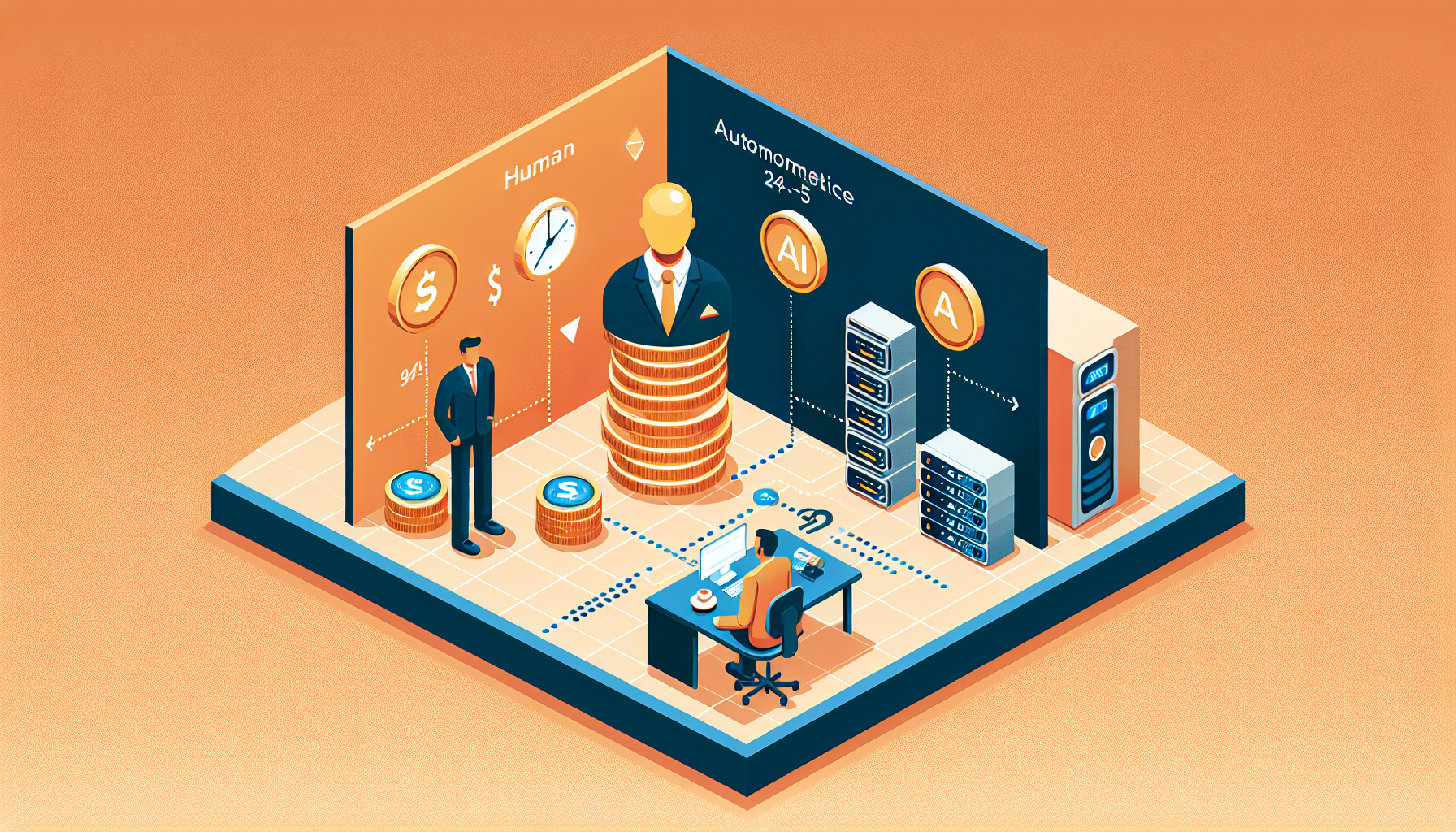
The payback period for autonomous customer service agents has compressed dramatically. In 2024, early adopters reported 12-18 month payback periods due to high implementation costs, limited platform maturity, and extensive customization requirements. By 2026, that timeline has shrunk to 6-9 months for most SMB deployments. Three factors drive this acceleration.
First, platform solutions have matured significantly. Providers like Intercom, Zendesk, and Ada now offer pre-built autonomous agent frameworks that integrate with common SMB tech stacks out of the box. What required custom development work in 2024 is now a configuration exercise in 2026. Second, the underlying AI models have become substantially more capable. The gap between “can answer questions” and “can resolve issues end-to-end” has closed. Third, implementation costs have dropped as competition has intensified and best practices have emerged. A typical SMB can now deploy a production-ready autonomous agent for $10,000-30,000 in upfront costs, compared to $50,000-100,000 in 2024.
Using our earlier example of $80,640 in annual savings, a $20,000 implementation investment pays back in under 3 months. Even accounting for ongoing platform fees of $1,000-2,000 monthly, the net savings in year one exceed $60,000. By year two, when implementation costs are fully amortized, the annual savings compound. This is why early adopters are reporting 5x ROI within six months—the combination of rapid payback and sustained savings creates exponential value.
If you evaluated AI customer service tools in 2023 or early 2024 and found them underwhelming, you’re not alone. The “GPT-powered chatbots” of that era were essentially glorified FAQ systems—they could retrieve information from a knowledge base and present it conversationally, but they couldn’t take action or handle multi-step problem resolution. The technology leap between those early chatbots and 2026’s autonomous agents is substantial, and understanding the difference is critical to evaluating ROI.
The fundamental shift is from deflection to resolution. Early chatbots were designed to deflect simple questions away from human agents, reducing ticket volume by 20-30%. If a customer’s issue required any action beyond information retrieval—processing a refund, updating an order, checking real-time inventory—the bot would escalate to a human. Autonomous agents in 2026 are designed to resolve issues end-to-end. They can execute actions across multiple systems, maintain context through complex multi-turn conversations, and make decisions based on business rules you define.
The technical architecture that enables this leap is called Retrieval-Augmented Generation, or RAG. In plain language, RAG means the AI can search your knowledge base, product catalog, order history, and other data sources in real time during a conversation, then use that information to formulate responses and take actions. This is fundamentally different from the static, pre-programmed response trees that powered earlier chatbots.
Here’s a concrete example. A customer contacts your support channel asking, “Where’s my order? I need it by Friday.” An old-style chatbot would ask for an order number, retrieve the tracking status, and display it. If the order was delayed, the bot would escalate to a human. A 2026 autonomous agent handles the entire resolution: it retrieves the order, checks the tracking status, recognizes the delivery date won’t meet the customer’s Friday deadline, checks inventory for the same item at a closer warehouse, offers expedited shipping at no charge as a service recovery gesture, processes the shipping upgrade, cancels the original shipment, and confirms the new delivery date—all in a single conversation thread that takes 90 seconds.
The implications for your business are significant. First, resolution rates increase dramatically. Where chatbots might successfully deflect 25-30% of inquiries, autonomous agents can fully resolve 60-75% of interactions without human involvement. Second, the types of issues that can be automated expand substantially. You’re no longer limited to “What are your business hours?” and “How do I reset my password?” You can automate refund processing, order modifications, subscription changes, account updates, and complex troubleshooting workflows.
Third, and perhaps most importantly, the customer experience improves rather than degrades. Customers don’t feel like they’re fighting with a dumb bot—they’re getting fast, accurate, actionable resolutions. As Intercom’s CTO noted in a November 2025 interview, “The agent can access and act on siloed data across your entire tech stack. It’s not just answering questions—it’s solving problems.” This capability shift is what transforms autonomous agents from a cost-cutting tool into a competitive advantage.
The theoretical ROI case is compelling, but what are SMBs actually achieving in production deployments? The data from early adopters provides concrete benchmarks you can use to model your own expected returns. Let’s examine three real-world case studies that represent typical SMB use cases and outcomes.
An e-commerce platform selling consumer electronics deployed an autonomous customer service agent in Q2 2025. Prior to implementation, they handled 800 support tickets monthly at an average cost of $15 per ticket—$144,000 annually. The tickets broke down into predictable categories: 35% order status inquiries, 25% return and refund requests, 20% product questions, 15% shipping issues, and 5% account management.
After a 60-day implementation and pilot phase, they launched the autonomous agent to handle all incoming support requests, with intelligent escalation to human agents for complex or emotionally charged issues. Within 90 days, the agent was successfully resolving 70% of all tickets end-to-end. Cost per AI-resolved ticket: $3. The math was transformative: 560 tickets at $3 equals $1,680 monthly, compared to $8,400 before. The remaining 240 tickets escalated to human agents still cost $15 each ($3,600 monthly). Total monthly support cost dropped from $12,000 to $5,280—a 56% reduction, or $80,640 in annual savings.

But cost savings were only part of the ROI story. The autonomous agent provided 24/7 support for the first time in the company’s history. Previously, support was available 9 AM to 6 PM Eastern time, leaving a 15-hour daily gap when customers could only submit tickets and wait for next-day responses. With always-on AI support, off-peak inquiries received instant resolution. The impact on revenue was measurable: off-peak sales conversions increased 12% because customers could get immediate answers to pre-purchase questions at midnight or on weekends.
Customer satisfaction scores told an equally compelling story. CSAT increased 15 points over two quarters, from 72% to 87%. Exit surveys revealed that customers appreciated the instant response times and consistent service quality. Interestingly, customers often preferred the AI for straightforward issues like order tracking and returns because resolution was faster than waiting in a human agent queue. The platform invested $18,000 in implementation costs and pays $1,200 monthly in platform fees. They broke even in month four. By month six, they had achieved 5x return on investment when accounting for both cost savings and incremental revenue from improved conversion rates.
The revenue impact of 24/7 autonomous support deserves deeper examination because it’s often underestimated in ROI calculations. For e-commerce and SaaS businesses, a significant portion of website traffic occurs outside traditional business hours. If you’re only offering support during a 9-to-5 window, you’re leaving money on the table during those off-peak periods.
Consider the customer journey for a considered purchase. A potential buyer visits your site at 10 PM, reads product descriptions, compares options, and has a specific technical question that will determine whether they buy. In a human-only support model, they submit a ticket and wait until tomorrow. Many will comparison shop with competitors overnight, and you’ve lost the sale by morning. With an autonomous agent, they get an instant, accurate answer and complete the purchase immediately. The conversion lift from this always-on availability typically ranges from 10-15% for off-peak traffic, according to 2026 benchmarks.
There’s also a retention and loyalty dimension. When customers encounter issues outside business hours—a failed payment, a shipping question, an account access problem—immediate resolution prevents frustration from compounding overnight. The autonomous agent becomes a competitive differentiator: “They’re always available when I need help” translates directly into customer lifetime value and reduced churn. One SMB SaaS company reported that 24/7 AI support reduced churn by 8% in the first year of deployment, attributing the improvement to faster issue resolution during critical moments.
Not all autonomous customer service agents are created equal. The difference between a successful deployment that delivers 5x ROI and a failed implementation that frustrates customers often comes down to six core capabilities. Before you evaluate platforms or begin implementation, use this framework to define your requirements and assess vendor solutions.
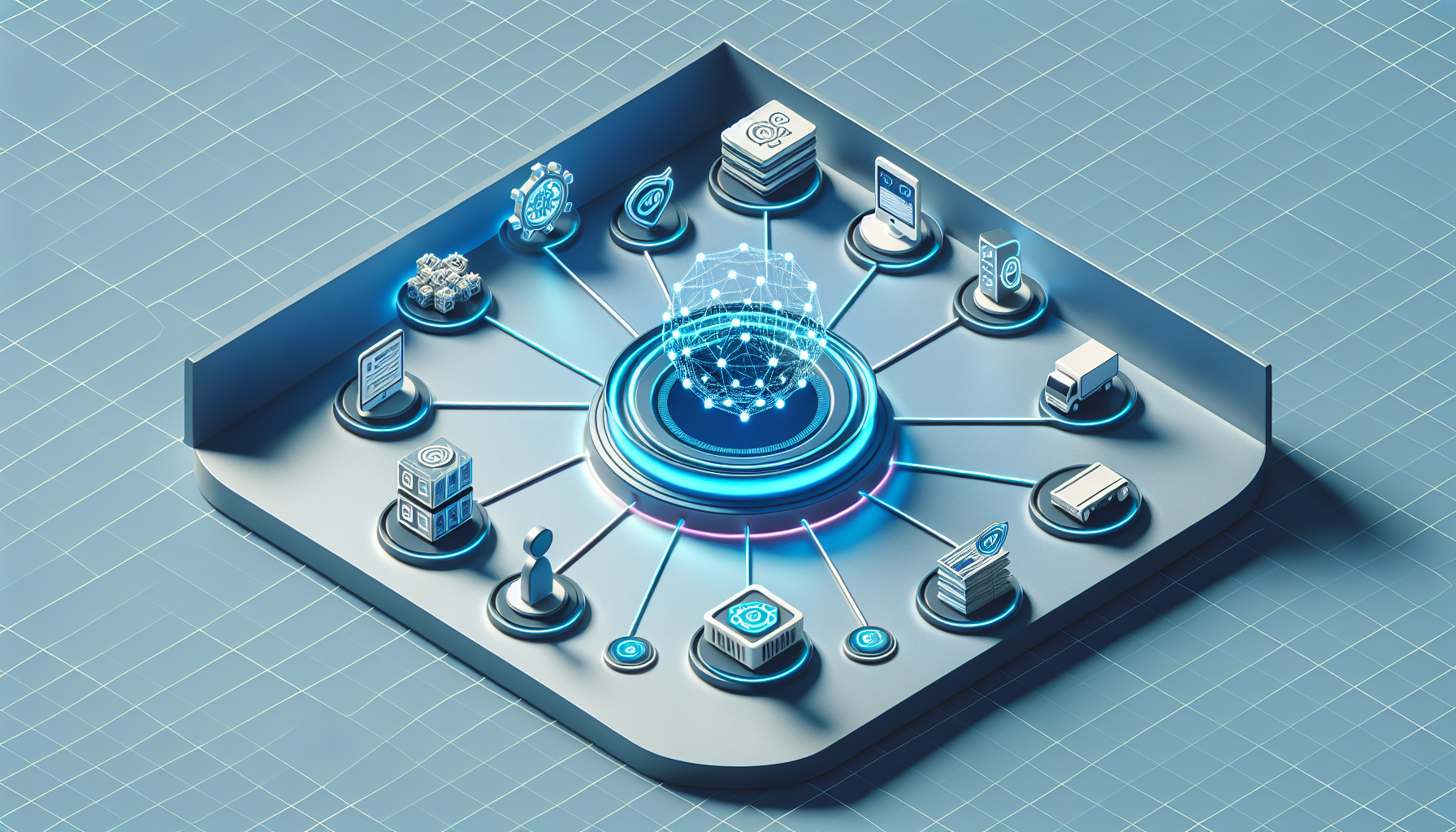
Multi-system integration is the foundation that enables true autonomy. Your agent must be able to read from and write to every system involved in customer service workflows: your CRM (customer history and context), inventory management system (real-time stock levels), order management platform (order status, modification, cancellation), payment processor (refund processing), shipping system (tracking, address updates), and knowledge base (product information, policies, troubleshooting guides).
Without deep integration, your agent devolves into an expensive chatbot that can only provide information, not take action. The integration requirement is why platform selection matters—solutions like Intercom, Zendesk, and Ada offer pre-built connectors to common SMB tools (Shopify, Stripe, ShipStation, HubSpot, Salesforce), dramatically reducing implementation time and cost. If you’re using less common or custom-built systems, you’ll need a solution that supports API-based integration and may require developer resources.
Test integration depth during vendor evaluation by asking: “Can your agent process a refund and update our accounting system without human intervention?” If the answer is no, keep looking. The ROI case depends on end-to-end resolution, and that requires the ability to execute actions, not just retrieve information.
Stateful conversation management is the second critical capability. Your autonomous agent must remember context across multiple turns in a conversation and across multiple conversations with the same customer over time. If a customer says, “I ordered the blue one but received the red one,” then three messages later asks, “Can you send the correct color?”, the agent needs to remember which product and order are being discussed without asking the customer to repeat information.
Natural language understanding is equally important. Customers don’t speak in structured queries—they use slang, make typos, switch topics mid-conversation, and express frustration in indirect ways. Your agent must handle “wheres my stuff???” as effectively as “Please provide the tracking number for order #12345.” Multi-language support is increasingly table stakes for SMBs serving diverse markets; the best 2026 solutions offer 20+ languages with consistent quality.
Intelligent escalation is where many implementations fail. Your agent must recognize when it’s out of its depth—emotionally charged situations, complex edge cases, requests that require human judgment—and hand off to a human agent smoothly. The handoff should include full conversation context so the human doesn’t make the customer repeat their issue. Equally important: the agent should learn from escalations. If the same issue type escalates repeatedly, that’s a signal to expand the agent’s training or update business rules.
Action execution is what separates autonomous agents from chatbots. Your agent must be able to process refunds, cancel orders, update shipping addresses, apply discount codes, reset passwords, modify subscriptions, and execute any other action a human agent would perform to resolve an issue. This requires not just API integration but also business logic: “Apply a 20% discount code if the customer’s order was delayed more than 5 days and this is their first complaint.”
Analytics and continuous learning close the loop. Your agent should track resolution rates by issue type, escalation patterns, customer satisfaction scores, and conversation length. This data feeds back into optimization: you’ll identify knowledge gaps, refine business rules, and expand the agent’s capabilities over time. The best platforms offer built-in analytics dashboards and A/B testing frameworks so you can measure the impact of changes.
Deploying an autonomous customer service agent doesn’t require a dedicated AI team or six-month project timeline. The 2026 playbook for SMBs is a focused 90-day implementation roadmap divided into three phases: audit and planning, platform selection and integration, and pilot and optimization. Here’s your step-by-step guide.
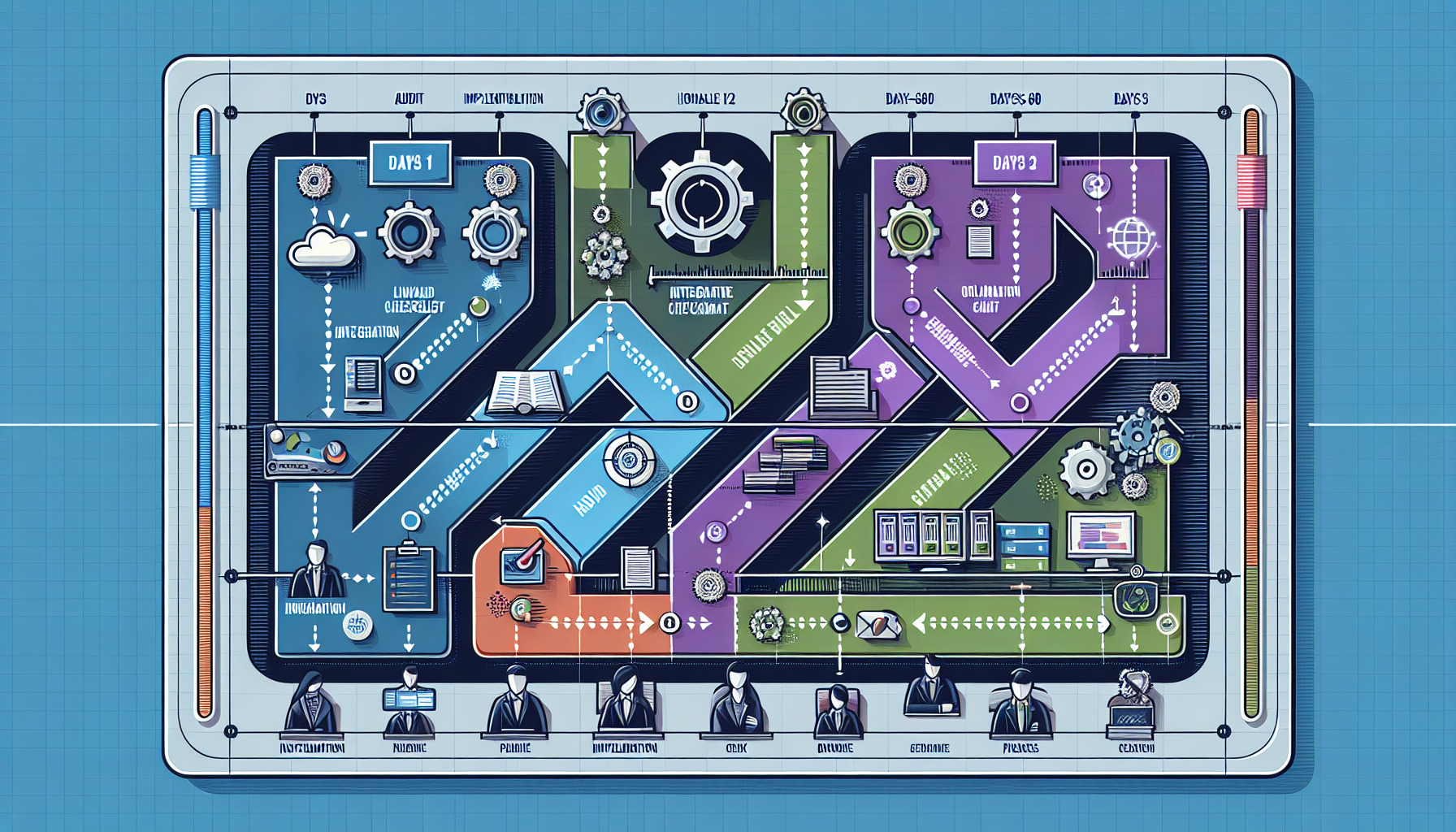
The first 30 days focus on understanding your current support operations and identifying the highest-value automation opportunities. Start by auditing your support ticket volume for the past 6 months. Categorize tickets by type: order status inquiries, returns and refunds, product questions, technical troubleshooting, billing issues, account management, and other. Calculate the percentage of total volume each category represents and the average resolution time for human agents.
Next, identify high-volume, low-complexity candidates for automation. These are ticket types that occur frequently, follow predictable patterns, and require minimal human judgment. Order status inquiries are the classic example—they represent 30-40% of volume for most e-commerce businesses and can be fully automated with proper integration. Returns and refunds are another strong candidate if your policies are clear and consistent.
Document your current tech stack and integration requirements. List every system your support team uses to resolve issues: CRM, order management, inventory, payment processing, shipping, knowledge base, and any custom tools. For each system, note whether it offers an API, what data you need to read, and what actions you need to execute. This inventory will drive your platform selection in Phase 2.
Finally, establish baseline metrics. Calculate your current cost per ticket, average resolution time, customer satisfaction score, and support team capacity. These benchmarks will let you measure ROI accurately post-implementation. Set realistic targets: 60-70% automation rate, 50-60% cost reduction, 10-15 point CSAT improvement, and 6-9 month payback period are achievable for most SMB deployments.
Days 31-60 focus on choosing your platform and completing technical integration. The build-versus-buy decision is straightforward for most SMBs in 2026: buy a platform solution unless you have unique requirements that can’t be met by existing tools. Platform solutions like Intercom, Zendesk, and Ada offer pre-built autonomous agent frameworks, extensive integration libraries, and proven deployment playbooks. Custom builds using OpenAI’s Assistants API or similar tools make sense only if you have in-house AI expertise and highly specialized workflows.
Evaluate platforms based on five criteria: integration depth with your existing tech stack, natural language understanding quality (request demos with your actual support data), action execution capabilities, analytics and reporting features, and total cost of ownership. Pricing models vary—some charge per resolution, others per conversation, others per month with volume tiers. Model your expected costs based on current ticket volume and target automation rates.
Budget expectations for 2026: platform solutions typically cost $500-2,000 per month depending on volume, with $10,000-30,000 in implementation services if you need professional help with integration and configuration. Custom builds start at $30,000 for development plus ongoing maintenance. For most SMBs, the platform route delivers faster time-to-value and lower total cost.
Once you’ve selected a platform, complete the technical integration. Connect your CRM, order management, inventory, payment, and shipping systems using the platform’s pre-built connectors or APIs. Build your knowledge base by documenting product information, policies, troubleshooting guides, and FAQs in a structured format the agent can search. Define business rules for common scenarios: refund policies, discount application logic, escalation triggers, and action approval thresholds.
The final 30 days are dedicated to piloting the agent with real traffic and optimizing based on results. Start by routing 20-30% of incoming support requests to the autonomous agent, with the remainder going to human agents as usual. This parallel operation lets you measure performance without risking customer experience if issues arise.
Monitor three key metrics daily: resolution rate (percentage of conversations the agent completes without escalation), customer satisfaction score (post-interaction survey), and escalation patterns (which issue types are escalating and why). Set a quality threshold: if CSAT drops below your baseline or escalation rate exceeds 40%, pause and diagnose before expanding traffic.
Use escalation data to iterate rapidly. If the agent consistently escalates a specific issue type—say, international shipping questions—that signals a knowledge gap. Update your knowledge base, refine business rules, or expand integration to address the gap. The best implementations treat the first 30 days of pilot as a learning phase, making daily improvements based on real conversation data.
By day 90, you should have clear ROI data: actual resolution rate, cost per ticket (AI vs. human), CSAT scores, and total cost savings. If metrics meet or exceed your targets from Phase 1, expand the agent to handle 100% of incoming traffic. If metrics fall short, extend the pilot phase and focus on the specific gaps—usually knowledge base completeness, integration depth, or business rule refinement.
Even with a solid implementation roadmap, several common pitfalls can derail autonomous agent deployments or limit ROI. Learning from early adopters’ mistakes will save you time, money, and customer frustration. Here are the four most frequent failure modes and how to avoid them.
Pitfall one: deploying without a comprehensive knowledge base. Many SMBs underestimate the documentation required for an autonomous agent to perform well. If your knowledge base has gaps—missing product specifications, unclear policies, incomplete troubleshooting guides—the agent will escalate frequently or provide incorrect information. Both outcomes damage customer experience and limit ROI.
The solution is front-loading knowledge base development in Phase 1 of your implementation. Audit your existing documentation, identify gaps, and fill them before launch. Involve your support team in this process—they know which questions come up repeatedly and which answers work best. Aim for 80% coverage of your ticket volume before piloting. You’ll continue to expand the knowledge base based on escalation patterns, but starting with solid coverage prevents early failures.
Pitfall two: shallow integration that limits action execution. If your agent can read data but can’t write back to your systems, it becomes an expensive information retrieval tool rather than a true autonomous agent. The ROI case depends on end-to-end resolution, which requires the ability to process refunds, update orders, modify accounts, and execute other actions without human intervention.
Avoid this by prioritizing integration depth during platform selection. Test action execution during vendor demos: “Show me the agent processing a refund and updating our accounting system.” If the platform can’t demonstrate bidirectional integration with your core systems, it won’t deliver the ROI you’re modeling. Budget adequate time in Phase 2 for integration work—this is where many implementations stumble.

Pitfall three: lack of transparency about AI interaction. The AI Accountability Act of 2025 requires businesses to disclose when customers are interacting with an AI system rather than a human. Beyond legal compliance, transparency is good customer experience practice. Customers who discover mid-conversation that they’re talking to a bot often feel deceived, damaging trust and satisfaction.
The solution is simple: disclose AI interaction upfront. Most platforms offer customizable greeting messages—use them to set expectations clearly: “Hi! I’m an AI assistant here to help resolve your issue quickly. I can handle most requests instantly, and I’ll connect you with a human team member if needed.” This transparency actually improves satisfaction because customers appreciate the honesty and understand why responses are so fast.
Pitfall four: no clear escalation path for complex or emotional issues. Autonomous agents excel at straightforward, transactional interactions but struggle with emotionally charged situations, complex edge cases, and requests that require human judgment. If your agent doesn’t recognize these situations and escalate appropriately, you’ll frustrate customers and damage relationships.
Build intelligent escalation logic into your implementation from day one. Define clear triggers: profanity or expressions of extreme frustration, requests for supervisors or managers, issues involving legal or compliance matters, and any situation where the agent has attempted resolution twice without success. When escalation occurs, pass full conversation context to the human agent so the customer doesn’t have to repeat their issue. Train your human team to handle escalations smoothly, positioning the handoff as “Let me personally take care of this for you” rather than “Sorry the bot failed.”
Finally, address the ethical consideration of job displacement proactively. Autonomous agents will handle 40% of customer service interactions by the end of 2026, and that shift raises legitimate concerns about employment impact. The reality for most SMBs is that autonomous agents enable growth rather than replace existing staff. Your support team shifts from handling routine inquiries to focusing on complex issues, relationship building, and process improvement. As Dr. Alistair Finch noted in his research on AI adoption, “This isn’t a luxury, it’s a competitive necessity”—and SMBs that position autonomous agents as augmentation rather than replacement see better team adoption and customer outcomes.
The ROI case for autonomous customer service agents is clear: 60-70% cost reduction, 6-9 month payback periods, and 5x return on investment within the first year for well-executed implementations. But the strategic imperative goes beyond cost savings. By the end of 2026, autonomous agents will handle 40% of all customer service interactions across industries. SMBs that adopt early gain a competitive advantage in three dimensions: cost structure, customer experience, and operational scale.
On cost structure, the math is straightforward. If your competitors are operating at $3 per interaction while you’re still at $15, they can reinvest those savings in product development, marketing, or pricing—putting you at a sustained disadvantage. On customer experience, 24/7 availability and instant resolution times become table stakes. Customers increasingly expect immediate support, and “business hours only” feels antiquated in 2026. On operational scale, autonomous agents let you handle 3-5x the support volume without proportional headcount growth, enabling expansion into new markets or product lines without ballooning support costs.
The implementation roadmap outlined in this article—90 days from audit to production pilot—is achievable for any SMB with 10-200 employees. You don’t need a dedicated AI team, six-figure budget, or technical expertise beyond basic API integration. Platform solutions have matured to the point where deployment is a configuration exercise rather than a development project.
Start with Phase 1: audit your current support operations, categorize ticket types, and identify high-volume automation candidates. This 30-day exercise costs nothing beyond internal time and will give you the data to model your specific ROI. If the numbers work—and for most SMBs handling 500+ monthly tickets, they will—proceed to platform selection and implementation.
Nexarily AI specializes in helping SMBs implement autonomous customer service agents tailored to your specific business context, tech stack, and support workflows. We’ve guided dozens of companies through the 90-day roadmap, from initial audit through production deployment and ongoing optimization. If you’re ready to explore whether autonomous agents make sense for your business, we offer a free support operations audit that will quantify your potential ROI and identify your highest-value automation opportunities.
The question isn’t whether autonomous customer service agents will become standard in your industry—Gartner’s 40% prediction makes that trajectory clear. The question is whether you’ll be an early adopter capturing competitive advantage or a late follower playing catch-up. In 2026, autonomous agents aren’t future technology. They’re table stakes for SMBs that want to scale efficiently, serve customers exceptionally, and compete effectively. The ROI is proven. The technology is mature. The implementation roadmap is clear. What’s your next move?