📞 (954) 667-8695 | Fort Lauderdale, FL
Companies deploying autonomous AI agents in customer service are reporting an average 35% reduction in operational costs within the first year—a benchmark that seemed impossible with traditional chatbot technology. The difference? Chatbots deflect queries. Autonomous AI agents resolve them. By the end of 2026, Gartner projects that 40% of all customer service interactions will be handled by these advanced agents, up from less than 10% in 2024. For business owners managing support teams, this isn’t just another AI trend—it’s a fundamental shift in the economics of customer service. Here’s what’s changing, why it matters now, and how to evaluate whether your business is ready to make the transition.
Autonomous AI agents are AI systems that can reason through problems, remember context across conversations, and take actions across multiple business systems without human intervention. This is a fundamental departure from traditional chatbot technology. Where chatbots follow pre-programmed scripts and decision trees, autonomous agents use advanced reasoning models to solve novel problems they’ve never encountered before.
The key capability that separates agents from chatbots is API integration. Agents can read from and write to your CRM, order management system, shipping platform, billing software, and knowledge base—all in real time during a single customer conversation. A chatbot can tell a customer their order status. An autonomous agent can verify a damaged product from an uploaded photo, process a replacement order in Shopify, update the shipping address in Salesforce, and send a tracking number—all in one interaction, with zero human handoff.
Consider this scenario: A customer contacts support saying “My order was damaged, send a replacement to my new address.” With a traditional chatbot, that becomes three separate tickets and twenty minutes of back-and-forth between the customer, the bot, and eventually a human agent. With an autonomous AI agent, it’s resolved in ninety seconds. The agent verifies the damage claim, processes the replacement, updates the address, and confirms the new shipment—completing tasks across your entire tech stack without escalation.
Three core capabilities define autonomous agents in 2026. First, reasoning: agents use Large Language Models to understand intent, evaluate options, and make decisions based on context rather than following rigid rules. Second, tool use: agents can call external APIs with structured outputs, allowing them to perform actions like updating databases, processing refunds, or scheduling appointments. Third, orchestration: agents coordinate multiple actions across different systems in sequence, handling complex workflows that would require multiple human touchpoints with traditional chatbot technology.
Unlike chatbots that reset with each conversation, autonomous agents maintain persistent memory. They remember previous interactions, purchase history, support tickets, and preferences. When a customer returns three months later with a follow-up question, the agent picks up exactly where the last conversation ended. This stateful design is what enables true relationship continuity—something impossible with stateless chatbot systems that treat every interaction as brand new.
Sarah Jenkins, CEO of Adept AI, frames the distinction clearly: “Chatbots answer questions. Agents complete tasks. That shift from information retrieval to task completion is what’s driving the 35% cost reduction we’re seeing across deployments.”
The economic case for autonomous AI agents is backed by hard data from enterprise deployments. Forrester Research reports that companies implementing autonomous agents see an average 35% reduction in customer service operational costs within the first twelve months. That’s not a projection—it’s measured ROI from businesses that have completed full-year deployments.
First-contact resolution rates tell the story most clearly. Legacy chatbots achieve roughly 40% FCR—meaning six out of ten queries require escalation to a human agent. Autonomous agents deliver 75% FCR, according to Zendesk’s 2026 benchmark data. That 35-percentage-point gap translates directly to fewer human agent hours, lower payroll costs, and faster customer resolutions.

Containment rates—the percentage of queries resolved without human intervention—now exceed 80% for advanced agent deployments, according to McKinsey’s latest customer service automation study. That means eight out of ten customer interactions never reach your human support team. The remaining 20% that do escalate tend to be genuinely complex issues that benefit from human judgment and relationship skills.
Here’s how the cost equation works in practice. Assume your business handles 10,000 support queries per month. With a 40% chatbot containment rate, 6,000 queries escalate to human agents at an average handling cost of $8.50 per interaction. That’s $51,000 in monthly human agent costs. With an 80% agent containment rate, only 2,000 queries escalate, dropping your monthly cost to $17,000—a $34,000 monthly savings, or $408,000 annually. Factor in the agent platform cost (typically $2,000-$5,000/month for mid-market deployments), and you’re still looking at $380,000+ in net annual savings.
Cost reduction is only half the story. Customer satisfaction scores see an average 15-point lift when businesses upgrade from keyword-based chatbots to autonomous agents, according to Intercom’s 2026 CSAT analysis. Customers notice the difference between “I’m sorry, I can’t help with that” and “I’ve processed your refund and it will appear in your account within 3-5 business days.” The shift from deflection to resolution changes the entire customer experience.
The investment signal is clear: autonomous agent startups raised over $5 billion in venture funding in 2025, according to TechCrunch data. That capital is flowing into companies like Adept AI, Imbue, and platform providers like Zendesk and Intercom who are racing to democratize agent technology for businesses of all sizes.
Dr. Alistair Finch, VP Analyst at Gartner, summarizes the shift: “This is the end of the ‘I’m sorry, I can’t help with that’ era. Autonomous agents don’t just understand what customers want—they have the authority and capability to deliver it.”
Understanding the technical distinction between chatbots and autonomous agents is essential for making an informed platform decision. The differences go far deeper than marketing labels—they represent fundamentally different approaches to customer service automation.
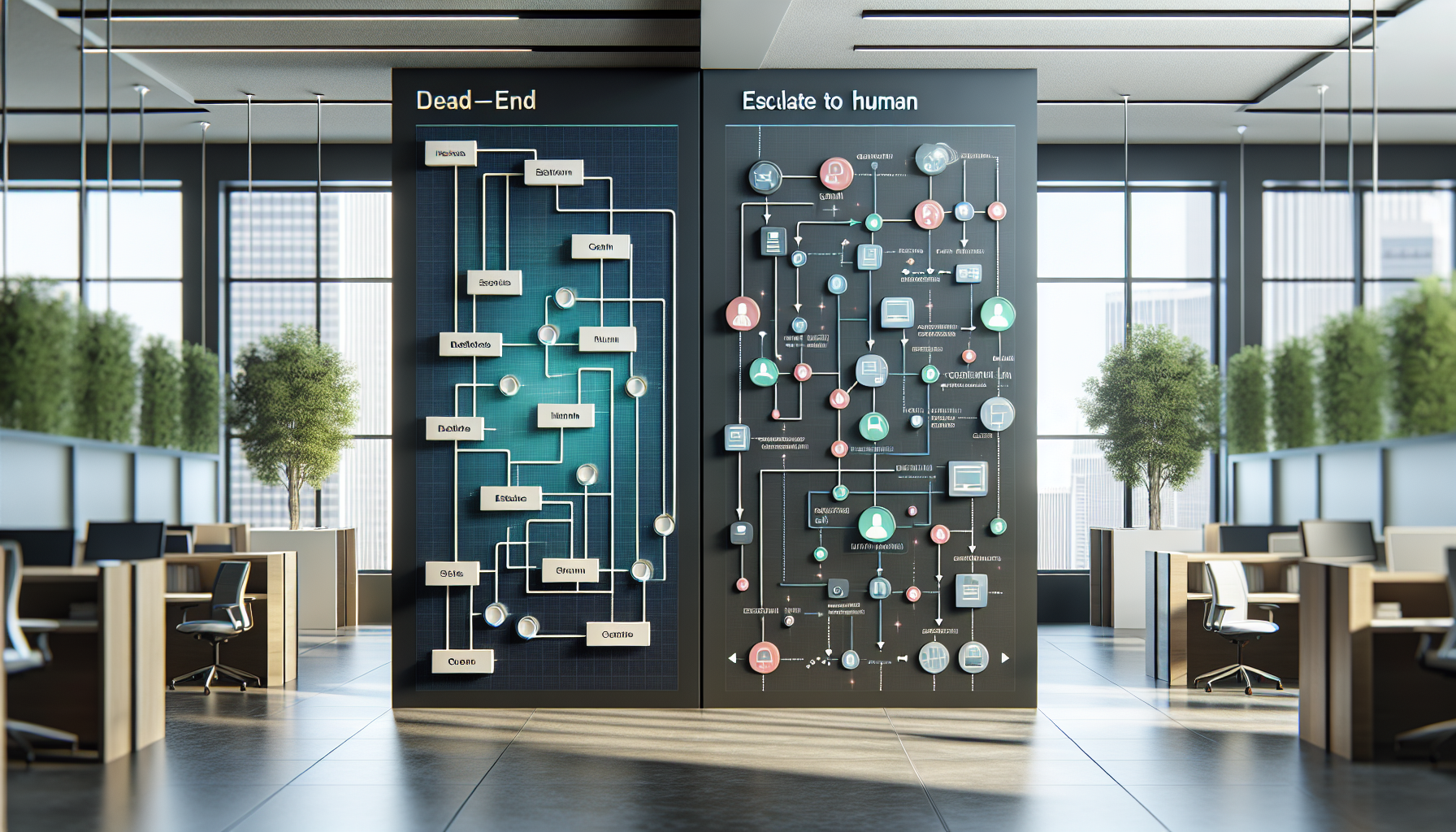
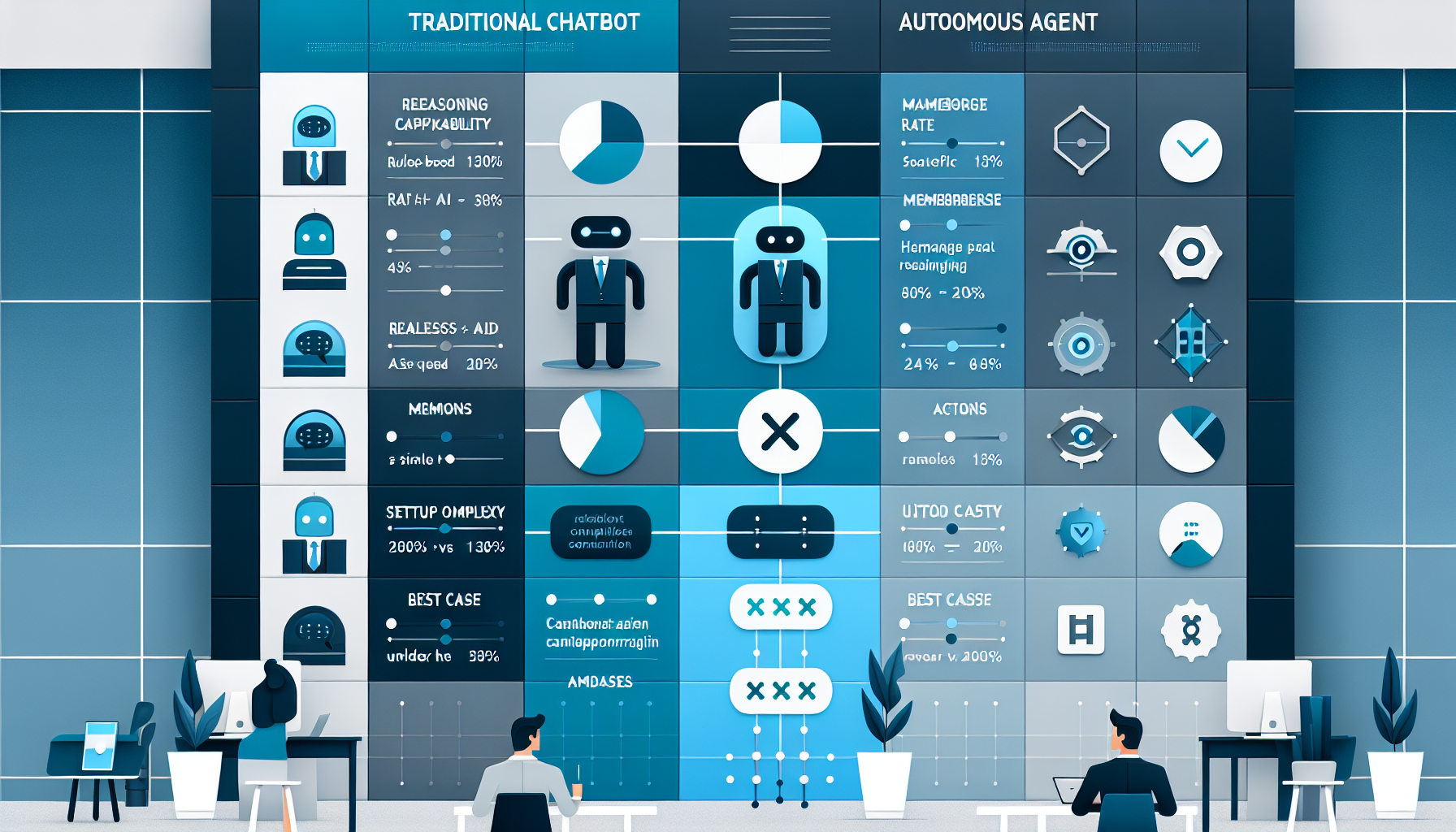
Chatbots operate on rule-based logic. They follow decision trees: if the customer says X, respond with Y. If the customer says Z, escalate to a human. This works well for simple, high-volume FAQs with predictable patterns. But the moment a customer asks something outside the script, the chatbot hits a dead end.
Autonomous agents use reasoning models—typically Large Language Models with tool-calling capabilities. They evaluate the customer’s intent, consider available actions, and choose the best path forward based on context. They’re not following a script; they’re solving a problem. This reasoning capability is what enables agents to handle novel situations without human intervention.
Memory is another critical distinction. Chatbots are stateless—they forget everything between conversations. Autonomous agents are stateful, maintaining persistent memory of customer history, preferences, and previous interactions. When a customer returns six months later, the agent remembers the context.
Action capability separates the two most clearly. Chatbots have read-only access to your systems—they can retrieve information but can’t change anything. Autonomous agents have read-write access, allowing them to update records, process transactions, schedule appointments, and trigger workflows across your entire tech stack. That’s the difference between providing information and completing tasks.
Escalation rates reflect these capability gaps. Traditional chatbots escalate 60% or more of queries to human agents. Advanced autonomous agents escalate less than 20%, and those escalations tend to be genuinely complex issues that benefit from human judgment.
Chatbots still make sense in specific scenarios. If you’re handling very simple, high-volume FAQs with zero need for personalization or action—like “What are your business hours?” or “Where is your return policy?”—a basic chatbot is faster and cheaper to deploy. Setup complexity for chatbots is minimal; you can launch a functional FAQ bot in a few hours with platforms like Intercom or Drift.
But if your support queries require any of the following, you need an autonomous agent: accessing customer data, updating records, processing transactions, coordinating across multiple systems, or remembering context between conversations. That covers the vast majority of real-world customer service scenarios.
The practical applications of autonomous AI agents span every industry with customer-facing operations. Here’s what agents are handling in 2026 across the most common business models.
E-commerce businesses see the most immediate ROI from autonomous agents. Agents handle order status inquiries by pulling real-time data from your shipping provider. They process returns and exchanges by verifying eligibility, generating return labels, and updating inventory systems. They manage shipping updates, including address changes mid-transit. And they provide product recommendations based on purchase history and browsing behavior—all without human intervention.
A typical scenario: Customer contacts support saying their package was delivered to the wrong address. The agent verifies the delivery error with the carrier, processes a replacement order, updates the shipping address in your CRM, and sends a new tracking number—all in one conversation. Time saved versus human handling: 12-15 minutes per interaction. Cost saved: $6-8 per resolution.
SaaS companies use autonomous agents for account troubleshooting, billing inquiries, feature education, and onboarding automation. An agent can diagnose why a customer’s API integration isn’t working by checking their authentication credentials, reviewing error logs, and suggesting specific code fixes. It can update billing information, process refunds, and adjust subscription tiers—all tasks that previously required human agent involvement.
The onboarding use case is particularly powerful. Agents guide new users through setup workflows, answer product questions in real time, and proactively check in when users get stuck. This reduces time-to-value and improves activation rates without scaling your customer success team.
Professional services firms—law offices, consulting agencies, medical practices—use autonomous agents for appointment scheduling, document retrieval, invoice questions, and project status updates. An agent can check your calendar, propose available time slots, book the appointment, send confirmation emails, and add the meeting to both parties’ calendars. It can retrieve signed contracts from your document management system and email them to clients. It can answer billing questions by pulling invoice data from your accounting software.
These workflows used to require administrative staff time. Now they’re fully automated, freeing your team to focus on billable client work instead of scheduling logistics.
Ben Thompson of Stratechery frames the shift perfectly: “Human agents become exception handlers for high-value problems. The routine work—which is 80% of volume—gets handled by autonomous agents. That’s not job elimination; it’s job elevation.”
The autonomous agent revolution didn’t happen overnight. It’s the result of three years of rapid technological advancement that finally made reliable, production-ready agents possible.
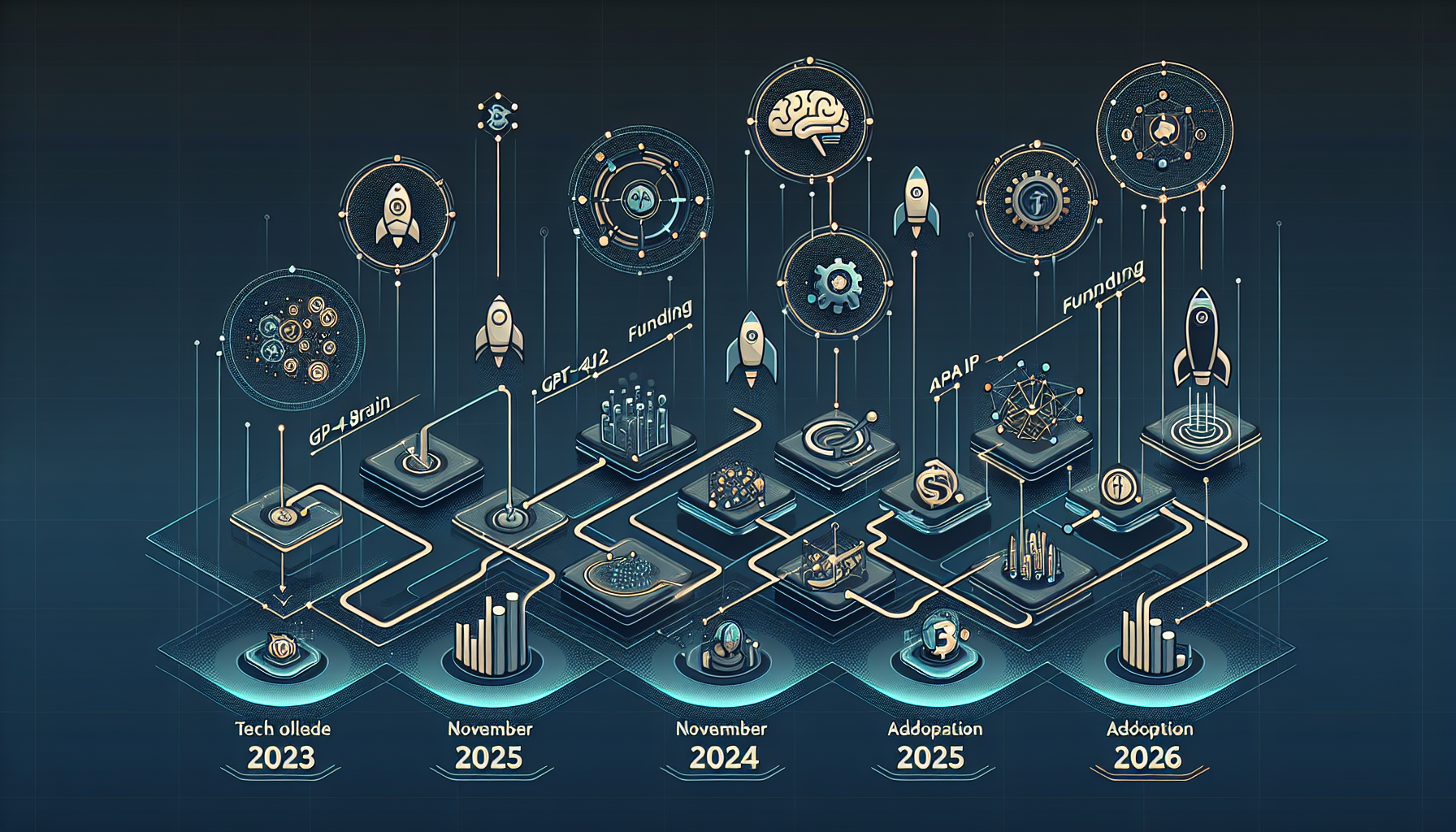
In 2023, GPT-4 and similar Large Language Models provided the reasoning foundation. These models could understand natural language, generate human-like responses, and even follow multi-step instructions. But they couldn’t take actions—they could only generate text.
November 2024 marked the breakthrough: OpenAI launched the Assistants API with reliable “tool use” capabilities. For the first time, LLMs could call external APIs with structured outputs. An agent could now say “I need to check the order status” and actually execute a function call to your order management system, receive the data back, and incorporate it into the customer conversation. This tool-calling capability is what transformed language models from text generators into action-takers.
2025 saw the emergence of “Large Action Models” (LAMs)—AI systems specifically trained to take actions, not just generate text. Companies like Adept AI and Imbue raised hundreds of millions in funding to build models that understand software interfaces, API documentation, and workflow logic. These LAMs can navigate complex multi-step processes across different platforms without explicit programming for each scenario.
November 2025 brought the democratization moment: Zendesk and Intercom launched no-code agent builders, making autonomous agent technology accessible to businesses without dedicated AI engineering teams. You can now build a functional agent by connecting your existing systems through visual interfaces, defining permissions, and setting escalation rules—no code required.
Key enabling technologies that made this possible include function calling (LLMs can invoke external APIs), structured outputs (JSON mode ensures reliable data formatting), persistent memory (agents maintain context across conversations), and secure API orchestration (agents can coordinate actions across multiple systems with proper authentication and audit logging).
Why this matters for business owners: the barrier to entry has dropped dramatically. You no longer need a dedicated AI team to deploy an autonomous agent. If you’re already using Zendesk or Intercom for customer support, you can launch an agent in days, not months.
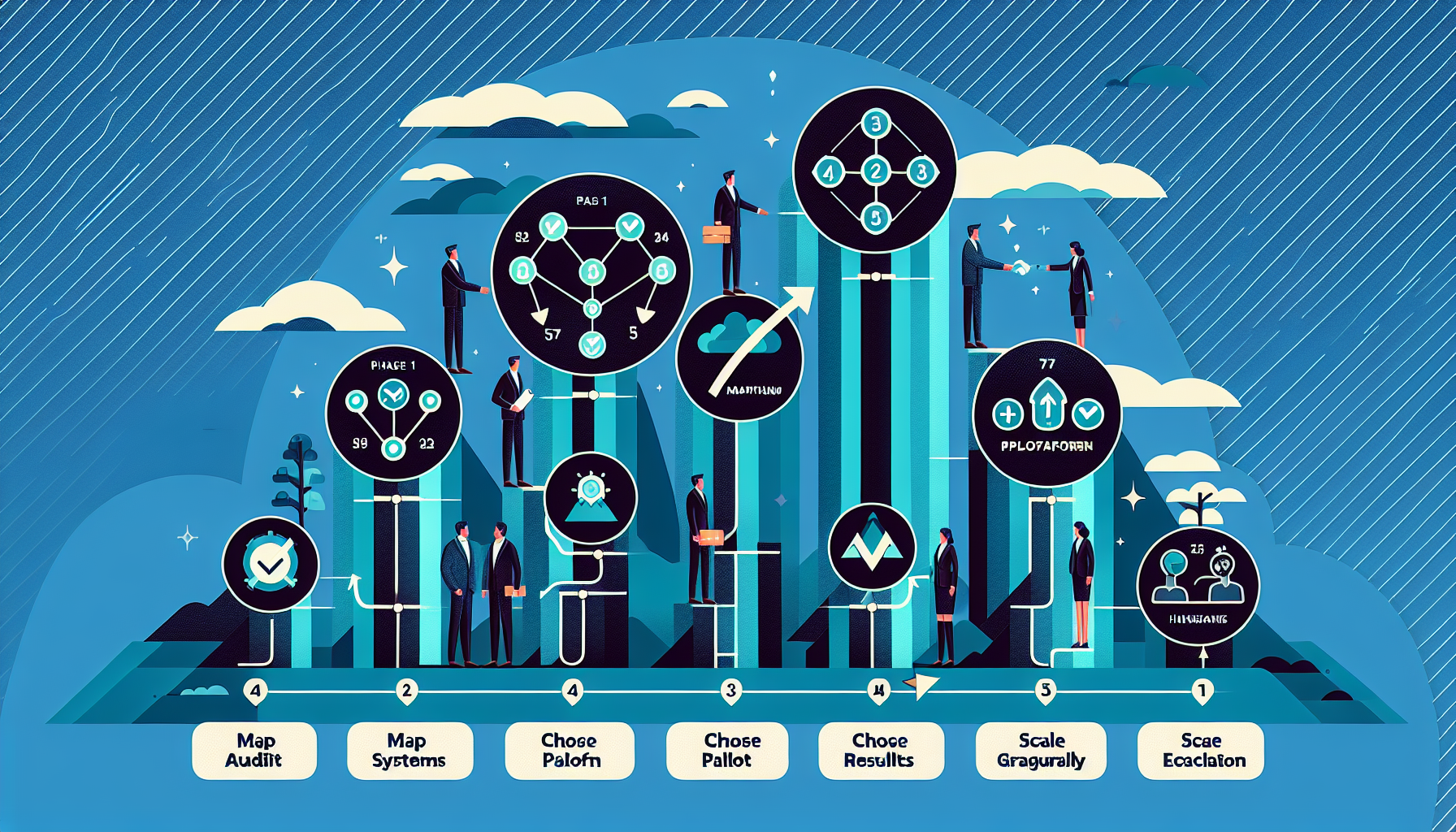
Transitioning from chatbots to autonomous agents requires a structured approach. Here’s the seven-phase roadmap that successful deployments follow in 2026.
Phase 1 is audit. Review your current support workflow and identify the top 10-15 query types that account for 60-80% of your total volume. These high-frequency queries are your best candidates for agent automation. Look for patterns: order status checks, return requests, billing questions, appointment scheduling, password resets. Document the current resolution process for each query type, including which systems are touched and how long resolution takes.
Phase 2 is system mapping. List every platform your agent will need to read from or write to: CRM (Salesforce, HubSpot), order management (Shopify, WooCommerce), billing (Stripe, QuickBooks), scheduling (Calendly, Acuity), knowledge base (Notion, Confluence), and any industry-specific tools. Document the API availability and authentication requirements for each system. This mapping exercise reveals integration complexity and helps you choose the right platform.
Phase 3 is platform selection. If you’re already using Zendesk or Intercom, their native agent builders are the fastest path to deployment. If you need maximum customization or have complex integration requirements, consider building on OpenAI’s Assistants API or Anthropic’s Claude API. Platform choice depends on three factors: your existing tech stack, available technical resources, and budget. Native platform agents cost $2,000-$5,000/month for mid-market deployments. Custom-built agents require engineering time but offer unlimited flexibility.
Phase 4 is the read-only pilot. Start by giving your agent read-only access to systems. Let it retrieve information and suggest actions, but require human approval before any write operations. This de-risks the deployment and builds team confidence. Run the read-only pilot for 2-4 weeks, monitoring accuracy and customer feedback.
Phase 5 is measurement. Choose one high-volume use case—typically order status inquiries or appointment scheduling—and give the agent full read-write access for that workflow only. Measure four key metrics: first-contact resolution rate, containment rate (percentage resolved without human escalation), customer satisfaction score, and cost per resolution. Compare these metrics to your baseline chatbot or human-only performance. Most businesses see measurable improvement within the first month.
Phase 6 is gradual expansion. Add one new capability or use case per month. Don’t try to automate everything at once. Each new workflow should be piloted, measured, and optimized before moving to the next. This staged approach prevents quality issues and gives your team time to adapt. Timeline: most businesses reach 70-80% containment rates within 3-6 months of initial deployment.
Phase 7 is establishing human escalation protocols. Define clear criteria for when the agent should hand off to a human: customer explicitly requests human assistance, agent confidence score falls below threshold (typically 70%), issue involves sensitive topics (legal, medical, financial disputes), or resolution requires judgment calls outside the agent’s authority. Ensure seamless context transfer—when a human agent picks up the conversation, they should see the complete interaction history and the agent’s reasoning for escalation.
Build feedback loops: when human agents override or correct agent decisions, log those corrections and use them to refine the agent’s training. This continuous improvement cycle is what drives containment rates from 70% to 80%+ over time.
Autonomous agents deliver measurable ROI, but they introduce new risks that require proactive management. Here are the key considerations for 2026 deployments.
Job displacement is the most sensitive concern. Be transparent with your support team from day one: autonomous agents handle repetitive, high-volume tasks so human agents can focus on complex, high-value interactions that require empathy, judgment, and relationship skills. Frame the transition as job elevation, not job elimination. In practice, most businesses redeploy support staff to customer success, sales support, or specialized technical roles rather than reducing headcount.
Data privacy and security require heightened attention. Autonomous agents need deep system access—they’re reading customer data, processing transactions, and updating records across your entire tech stack. Ensure your agent platform is SOC 2 compliant, uses end-to-end encryption for data in transit and at rest, and provides comprehensive audit logging. Every action the agent takes should be logged with timestamps, reasoning chains, and outcomes. This audit trail is essential for compliance, debugging, and accountability.
Accountability and error handling protocols are critical. When an agent makes a mistake—processes the wrong refund amount, schedules an appointment at the wrong time, or provides incorrect information—who is responsible? Build clear escalation and review protocols. Define error categories (minor, moderate, critical) and response procedures for each. Monitor agent decisions in real time during the first 90 days of deployment, with human review of all high-stakes actions (refunds over $X, account closures, data deletions).
“Black box” decision-making is a legitimate concern. Some agent platforms don’t provide full transparency into reasoning—the agent makes a decision, but you can’t see why. Choose platforms that log decision chains and reasoning steps. This transparency is essential for debugging, compliance, and building customer trust.
Customer acceptance varies by demographic and context. Some customers will always prefer human interaction, especially for sensitive or high-stakes issues. Always offer an easy, obvious path to a human agent. Don’t force customers to “prove” they need human help. A simple “speak to a person” button should be visible in every agent conversation.
Ongoing maintenance is non-negotiable. Agents need continuous training on new products, updated policies, and edge cases discovered in production. Budget for monthly review sessions where your team evaluates agent performance, identifies failure patterns, and updates training data. This isn’t a “set it and forget it” technology—it’s a living system that improves with active management.
The autonomous agent market has consolidated around a few key platforms in 2026. Here’s how the major players compare.
Zendesk launched its native agent builder in November 2025 with deep CRM integration and pre-built connectors for major e-commerce and SaaS platforms. Best for: businesses already using Zendesk for support who want the fastest path to deployment. Pricing: $2,500-$4,000/month for mid-market deployments. Strengths: seamless integration with existing Zendesk workflows, strong analytics, enterprise-grade security. Limitations: less customization flexibility than custom-built solutions.
Intercom positions itself as the AI-first customer service platform, with advanced analytics and strong performance for SaaS companies. Best for: tech companies with complex product support needs. Pricing: $3,000-$5,000/month. Strengths: sophisticated conversation routing, proactive outreach capabilities, excellent developer documentation. Limitations: higher cost than Zendesk, steeper learning curve.
OpenAI Assistants API and Anthropic Claude API enable custom-built solutions with maximum flexibility. Best for: businesses with unique integration requirements or in-house engineering teams. Pricing: pay-per-use (typically $500-$2,000/month in API costs for mid-market volume). Strengths: unlimited customization, full control over data and logic, ability to fine-tune models. Limitations: requires technical resources, longer time to deployment, ongoing maintenance responsibility.
Adept AI and Imbue represent the cutting edge with Large Action Model technology specifically designed for multi-step task completion. Currently enterprise-focused with custom pricing. Best for: large enterprises with complex, multi-system workflows. Expected to launch mid-market offerings in late 2026.
Google’s Project Ellmann is expected to reach general release in Q2 2026, with strong multi-step reasoning capabilities and native integration with Google Workspace. Worth monitoring if your business is heavily invested in the Google ecosystem.
Selection criteria: evaluate based on existing tech stack compatibility (choose Zendesk if you’re already on Zendesk), technical resources available (custom-built requires engineering time), budget (native platforms are $2,000-$5,000/month, custom is pay-per-use), required integrations (check pre-built connector availability), and compliance requirements (ensure SOC 2, GDPR, HIPAA as needed).
The autonomous agent market is evolving rapidly. Here’s what’s coming in the next 12-18 months.
Gartner’s projection of 40% of customer service interactions handled by agents by end of 2026 is on track based on current adoption rates. That represents a 4x increase from 2024 levels in just two years—one of the fastest enterprise technology adoption curves in recent history.
Emerging capabilities will transform agents from reactive to proactive. Proactive outreach is already in pilot: agents that monitor system data, identify potential issues (a shipment is delayed, a payment failed, a subscription is about to expire), and reach out to customers before they contact support. This flips the traditional support model—instead of waiting for customers to report problems, agents solve them preemptively.
Voice-based agents are coming in 2026-2027, bringing autonomous agent capabilities to phone support. Early pilots show promising results, though voice introduces new challenges around accent recognition, background noise, and conversational interruptions. Expect voice agents to reach production maturity in 2027.
Multi-agent orchestration—multiple specialized agents working together on complex workflows—is the next frontier. Imagine a billing agent that collaborates with a technical support agent and a scheduling agent to resolve a complex account issue. This orchestration capability is currently in research labs but expected to reach enterprise deployments by late 2026.
The regulatory landscape will tighten. Expect increased scrutiny around AI decision-making in customer service, particularly in financial services and healthcare. The EU AI Act already classifies customer service agents as “limited risk” systems requiring transparency and human oversight. US regulation is likely to follow in 2027. Build compliance into your agent architecture from day one—it’s easier than retrofitting later.
The strategic shift from cost center to profit center is already happening. As agents handle routine work, human support teams are being redeployed to revenue-generating activities: upselling, retention campaigns, and relationship building with high-value accounts. This transforms customer service from a pure cost center into a profit contributor—a fundamental change in how businesses think about support operations.
Autonomous AI agents are not a future trend—they’re a 2026 reality delivering measurable ROI. The data is clear: 35% cost reduction within twelve months, 75% first-contact resolution rates, 80%+ containment rates, and 15-point CSAT lifts. These aren’t projections; they’re measured outcomes from businesses that have completed full-year deployments.
The transition from chatbots to agents requires planning and investment, but the barrier to entry has never been lower. No-code platforms from Zendesk and Intercom make autonomous agents accessible to businesses without dedicated AI engineering teams. You can launch a pilot in weeks, not months, and see measurable results within the first 90 days.
Yes, this technology changes the role of human support agents. But it elevates them from repetitive task handlers to high-value problem solvers and relationship builders. The businesses seeing the strongest results are those that frame the transition as job elevation, not job elimination, and invest in retraining their teams for higher-value work.
If your chatbot is creating more work than it’s eliminating—if your escalation rates are above 50%, if your customers are frustrated by “I can’t help with that” responses, if your support costs are growing faster than your revenue—it’s time to evaluate autonomous agents.
Not sure if your support workflow is ready for autonomous agents? Nexarily AI offers a free 30-minute support audit to identify your highest-ROI automation opportunities. No sales pitch—just actionable insights on where agents can deliver the fastest payback in your specific business context. Visit nexarilyai.com/support-audit to schedule your assessment.
The economics of customer service are changing. The question isn’t whether to adopt autonomous agents—it’s how quickly you can deploy them before your competitors do.